Damp After Rain: How to Find the Source
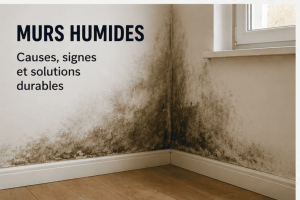
Do you notice a stain or a smell that comes back mostly after a downpour? When damp after rain reappears with every wet spell, it is usually not simple condensation: it is often the sign of an infiltration. Here is how to find the source of the problem and avoid blaming the wrong cause.
Damp after rain: think infiltration first
When traces of damp after rain form, the water most often comes from outside and gets in through a weak point in the structure. Unlike condensation, which depends on the indoor air, an infiltration follows the weather: it grows during and just after the shower, then dries slowly once the weather turns dry again.
Where can the water get in?
Several points deserve a look first.
- the roof: a cracked or slipped tile lets water through;
- the gutters: blocked with leaves, they overflow and run down the facade;
- a facade crack that soaks up rainwater;
- a damaged window seal or a sill that does not throw water off well;
- a terrace or balcony that is poorly sealed above a room.
How to pin down the source
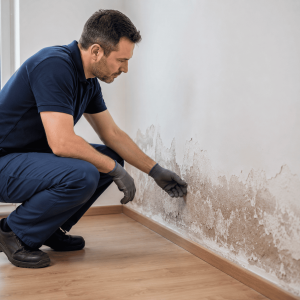
To find the source, watch closely where and when the stain appears.
- note whether the stain grows during the rain then dries afterwards, which is typical of an infiltration;
- spot the height of the mark: near the ceiling, look at the roof; near a window, check the seal and the sill;
- inspect the gutters during a downpour to see if they overflow;
- look for a crack on the facade, just above the indoor stain;
- watch whether the damp after rain always comes back in the same place.
Infiltration, condensation or rising damp?
These three problems look alike but do not share the same origin. Infiltration is linked to rain and a fault in the structure, high up or on an exposed wall. Condensation appears on cold surfaces when the indoor air is too damp, with no link to the weather. Rising damp comes from the ground: water climbs up the base of the walls, often leaving a horizontal mark and salt deposits near the floor. Damp after rain that affects the top of a wall points clearly to infiltration.
Once you have found the cause
If the mark does not move with the weather but appears in the morning on the panes, look instead at condensation on windows. And to keep the air healthy once the leak is repaired, apply our advice against humidity in the house.
Frequently asked questions
How do I tell infiltration from condensation?
Infiltration follows the rain: the stain grows after the shower and often sits high up or on an exposed wall. Condensation forms on cold surfaces in the morning, with no link to the weather. Watching when the damp after rain appears is the best clue.
Should I wait to repair an infiltration?
No, it is better to act quickly. As long as water gets in, it damages the walls and the insulation and encourages mold. Find the entry point, clean the gutter or have the roof checked, then let it dry fully before any surface repair.