Dry a damp wall without resin injection
Resin injection is a well-known method against rising damp, but it is not the only option. Many homeowners now want to dry a damp wall without multiple drill holes, without injected chemicals and without heavy work. This search intent reflects a real concern: treating damp without further damaging the property.
Why avoid injection in some cases?
Injection can be useful in certain configurations, but it requires precise application. If the wall is irregular, very thick, cracked or made of mixed stone, the result can be harder to control. Cost and associated work may also discourage homeowners.
Alternatives without injection
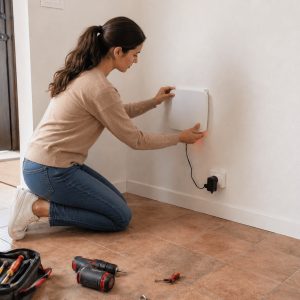
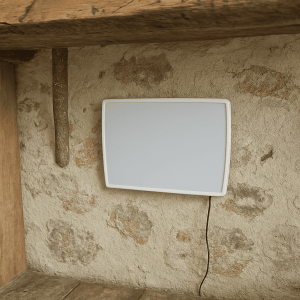
ATE and ATG devices offer another approach when damp comes from rising moisture. They do not require drilling along the entire wall and do not involve injecting a product into the masonry. Their aim is to support gradual wall drying without heavy transformation of the building.
The right conditions for success
A wall must be able to breathe. If cement render, waterproof paint or internal lining blocks evaporation, drying will be slower. Ventilation must also be checked, and additional causes such as leaks or infiltration must be removed.
When should caution be kept?
If water enters under lateral pressure, through a buried cellar or because of an external waterproofing defect, an anti-damp device is not enough. The water entry must be treated first. The device becomes relevant when the main cause is moisture rising from the ground.
Choosing without making a mistake
The Humidité Conseil online selection tool helps guide the choice toward a suitable ATE or ATG device. It helps avoid a solution that is too weak, too powerful or simply unsuitable for the origin of the problem.