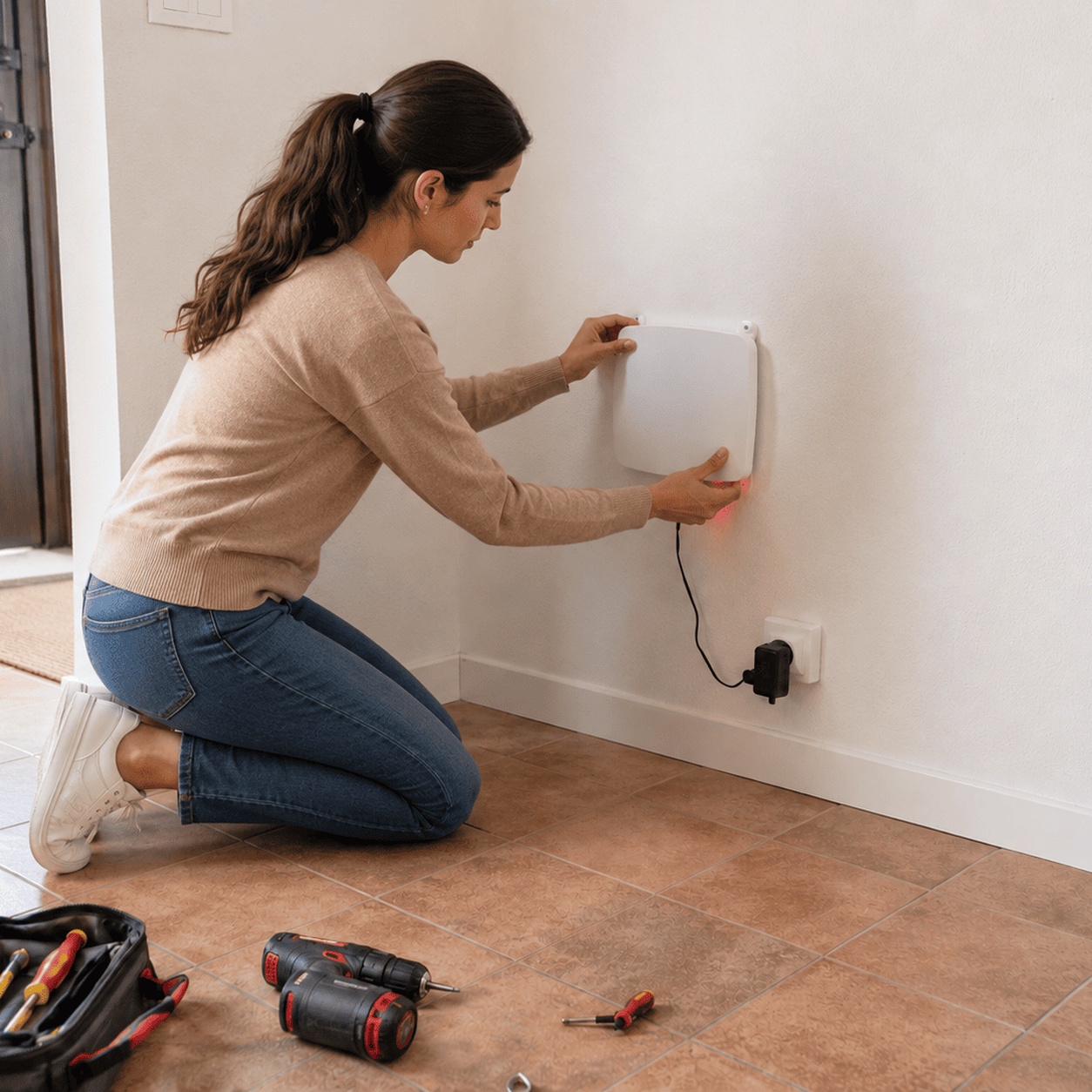
ATE device: operation, installation and limits
ATE device: operation, installation and limits
An ATE device is an electromagnetic solution designed to support the drying process of walls affected by rising damp. It is intended for homes, older buildings and rooms where moisture rises from the ground through porous materials.
On Humidité Conseil, the ATE range is usually the preferred option when the building has an electrical socket and a suitable load-bearing wall for installation. It is an active device, connected to mains power, and it works continuously.
What is an ATE device used for?
The ATE device is intended for rising damp only. It does not repair leaks, it does not treat lateral water ingress, it does not solve excessive condensation and it does not replace repairs after water damage.
Its role is to support the gradual drying of walls when moisture comes from the ground. This point matters because many disappointing results come from a wrong initial assessment or from using the device for the wrong moisture problem.
Where should an ATE device be installed?
An ATE device must not be installed randomly. It must be fitted on a load-bearing wall, low on the wall, in a location that matches the damp symptoms and the coverage radius of the selected model.
An ATE must not be installed on a light partition, plasterboard lining, decorative cladding or any surface that is not part of the building structure. In that situation, the installation is not compliant with the technical logic of the product.
The correct rule is simple: load-bearing wall, low position, stable location, suitable coverage area and continuous connection to an electrical socket.
Why is the ATE usually recommended first?
The ATE is generally recommended first because it is an active electromagnetic device. Its connection to an electrical socket allows continuous and regular operation.
When the building configuration allows correct installation, the ATE is therefore the most logical choice on Humidité Conseil. The ATG exists for more specific cases, especially when the building layout does not easily allow a powered device.
Common objections before buying
The first objection concerns time. A wall does not dry in a few days. Water stored inside the materials must leave gradually, especially in thick or old walls.
The second objection concerns installation. A device placed too high, fitted on a partition or installed outside its useful area does not follow the technical logic of the treatment.
The third objection concerns limits. If water enters through a façade, terrace, roof, missing drain or leak, that cause must be repaired separately before expecting a coherent result.
How to choose the right ATE model
The right choice depends on the area to cover, the structure of the building, wall thickness and the severity of the symptoms. An undersized model will not cover the property correctly. A poorly chosen model can also create unrealistic expectations.
Humidité Conseil offers an online selection guide to help customers choose the most suitable device for their home, its configuration and the damp symptoms observed.
Conclusion
The ATE device is a relevant solution against rising damp when the cause of moisture is correctly identified and when the installation follows the technical rules. It must be installed on a load-bearing wall, low on the wall, and remain continuously connected to an electrical socket.