ATE or ATG: which anti-damp device should you choose?
ATE or ATG: which anti-damp device should you choose?
The choice between ATE and ATG often comes up when looking for a device against damp walls. Both solutions can support drying linked to rising damp, but they do not follow the same installation logic.
On Humidité Conseil, the rule is clear: when the building configuration allows it, the ATE is generally recommended first. The ATG is mainly chosen when the environment does not easily allow the use of a device connected to an electrical socket.
ATE: the active mains-powered device
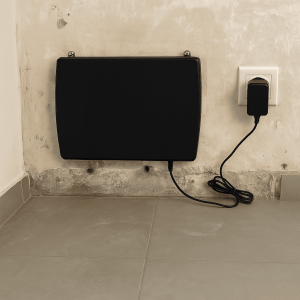
The ATE is an active electromagnetic device. It connects to an electrical socket and works continuously. This power supply allows regular action over time.
It must be installed on a load-bearing wall, low on the wall, in an area suited to the damp symptoms and the coverage radius of the selected model. It must not be installed on a partition, lining or decorative surface.
ATG: the solution without electrical connection
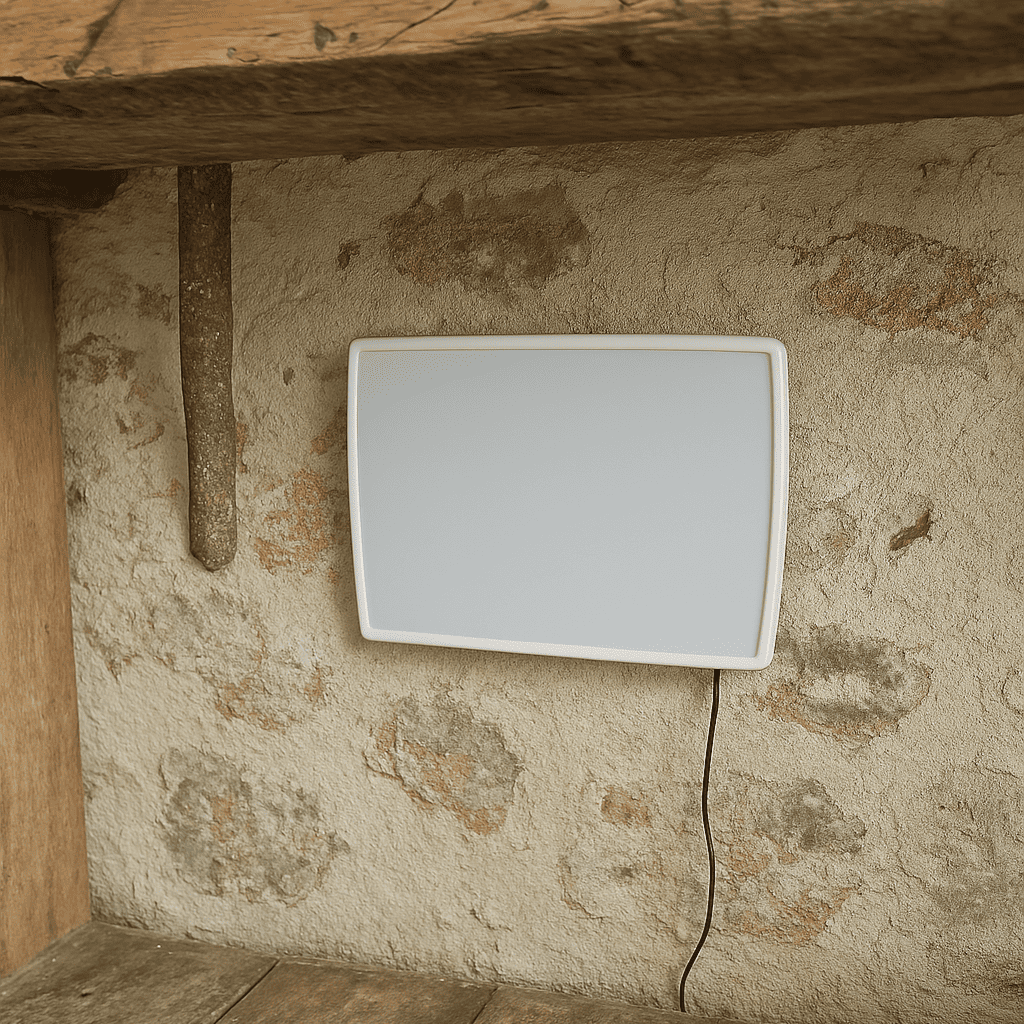
The ATG is a geomagnetic device without electricity. It is not plugged in, uses no power and requires no battery. Its main value appears when the building configuration does not easily allow the installation of a powered ATE device.
Why should you not choose randomly?
Choosing the wrong device can lead to disappointment. An ATE installed on a partition does not follow the installation rules. An ATG chosen when an ATE could have been installed correctly may also not match the most logical recommendation.
The decision must therefore consider the presence of an electrical socket, the available wall, the area to cover, visible symptoms and the real origin of the moisture.
Common mistakes
- Choosing a device without checking whether the moisture really comes from rising damp.
- Installing an ATE on a partition or lining instead of a load-bearing wall.
- Choosing an ATG when a powered ATE could have been installed correctly.
- Using a device for a leak, water ingress or condensation problem.
How Humidité Conseil helps with selection
Humidité Conseil offers an online selection guide. It helps direct customers toward an ATE or ATG model according to the property configuration, the presence of an electrical socket and the symptoms observed.
This approach avoids selling the same device to everyone. Above all, it helps choose a solution that matches the building and the real limits of each technology.
Conclusion
If an electrical socket is available and installation on a load-bearing wall, low on the wall, is possible, the ATE generally remains the priority recommendation. The ATG is mainly for configurations where a powered device is not practical or not possible.