Five checks for observing a damp home: William Coignard’s video
A damp home needs several points to be considered together. In this educational video, William Coignard explains five observation rules. Humidité Conseil helps place the explanations and the role of ATE and ATG devices in context.
Watch the original video (French)
1. Describe airing and ventilation
The video begins with air renewal, especially where everyday activities produce water vapour. Describe existing equipment, opening possibilities and when marks appear. This information sets out how the home operates day to day.
2. Locate indoor laundry drying
William Coignard then discusses the drying rack’s location and drying conditions. Place, duration and air circulation belong in the description. A rarely opened room is not automatically comparable to a differently used space.
3. Observe air paths and equipment
Extract terminals and air inlets are another point in the presentation. Each component’s role needs to be understood within the complete ventilation system. Mention stopped equipment, blocked grilles or known alterations when preparing an enquiry.
4. Gather observations about water entry
Openings, drains and accessible seals can provide useful clues. Keep general views and dates of known leaks or repairs. Do not climb onto a roof to prepare a file: necessary access should be defined as part of the investigation.
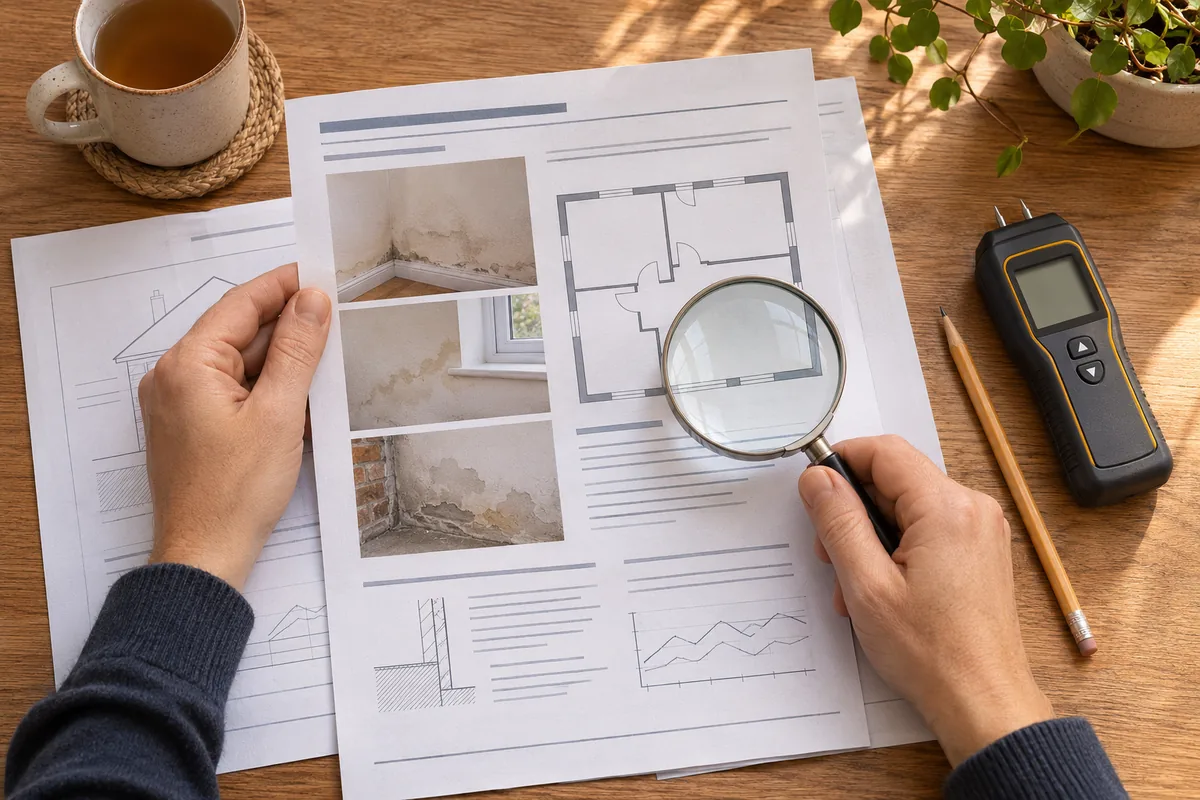
5. Examine low wall marks in context
The last point concerns damage low on walls and rising damp. Relate mark locations to the ground, surroundings and materials. A mark at the base alone does not automatically select a treatment.
Explanations to prepare an investigation
This is an advice video by William Coignard, a specialist in housing damp and unhealthy conditions. It introduces his approach to explaining these subjects. A building investigation needs a defined scope, suitable documents and checks; the video does not diagnose an individual home.
Understand the explanations before choosing
Humidité Conseil presents ATE and ATG ranges offered for rising damp. William Coignard’s videos provide context for understanding moisture questions. To choose a device, consult its model page, instructions and installation conditions, then prepare questions using the information available about your building.
A device intended for rising damp does not repair leaks or water ingress and does not replace appropriate ventilation. Understanding the problem remains essential to a coherent choice.
Contact Humidité Conseil for product questions
Outside France, product advice is provided by email only. This product-selling activity does not include on-site quotations or home moisture diagnosis.