Damp walls: what should you check before planning work?
Before choosing work, record where and when damp appears. Changes after rain, showering or near pipework point towards different checks. These observations prepare investigation; they do not replace an established cause.
Example and method
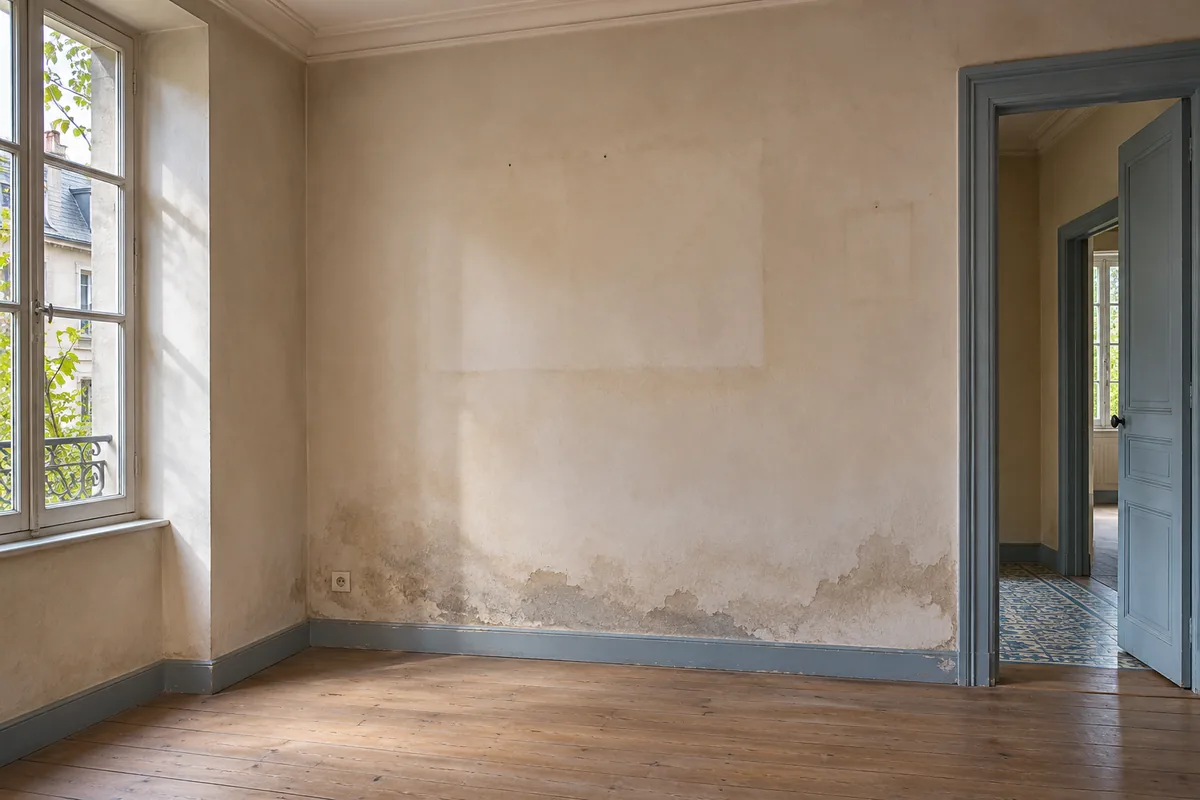
A low mark behind furniture can justify checking temperature and air movement, but also the external wall or nearby services. Do not infer rising damp from height alone. Avoid concealing the area before useful checks.
What visible signs can tell you
Peeling paint, lifting wallpaper, friable plaster, white deposits, mould or smell warrant checks. Alone they do not confirm the cause. A cold feel is not a moisture measurement. Low marks may fit capillarity, but leaks or lateral entry remain possible. High marks alone do not identify ingress either.
Photograph the room and details, inspect accessible faces and record rain, heating, occupancy and earlier work. Compare appearances over several dates rather than deciding from one picture.
Condensation and cold surfaces
Condensation depends on water vapour and surface temperature. Consider use, heating, air renewal and thermal bridges together. An insulated home is not automatically damp; examine actual operation.
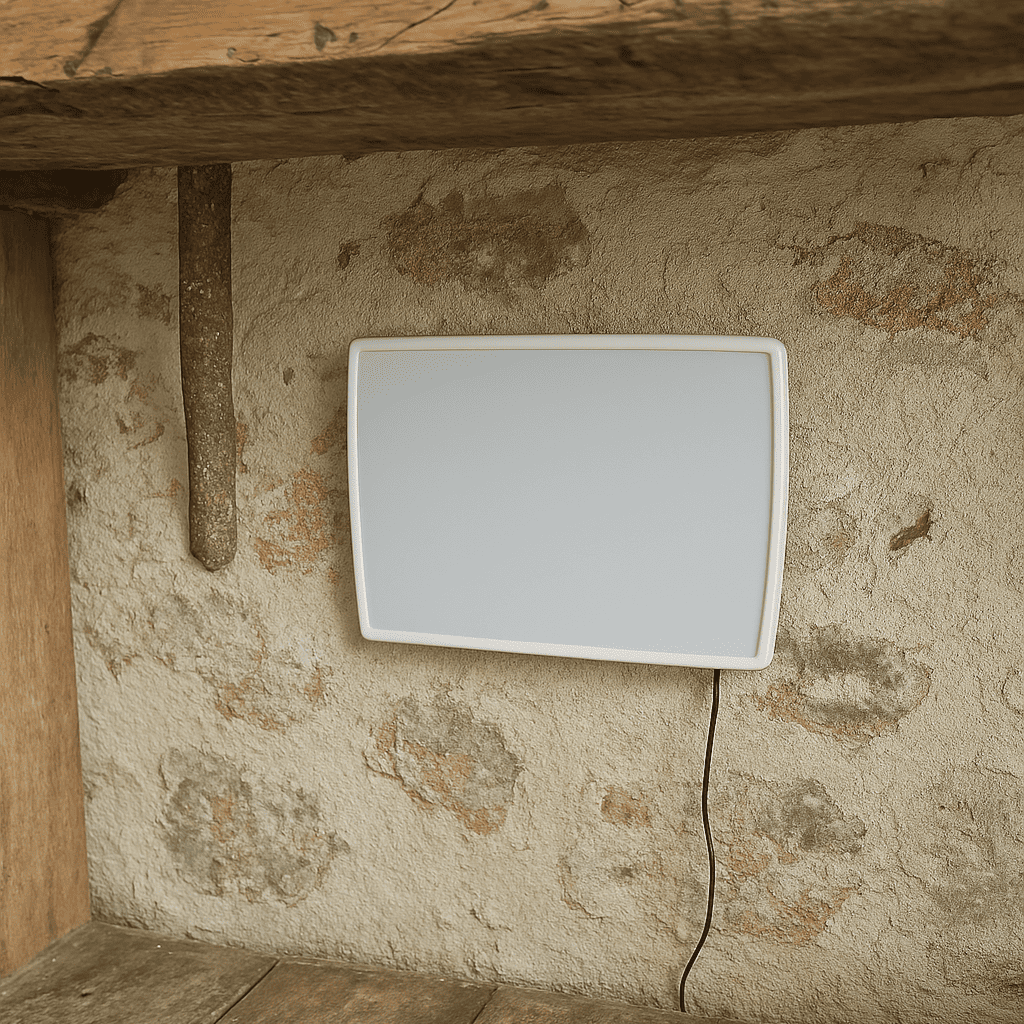
A hygrometer describes air, not direct wall water content. Action may require checks of ventilation and thermal conditions. A rising damp device does not replace that assessment.
Ingress and leaks
Façades, roofs, terraces, connections and buried walls may need different investigations. A change after rain is useful evidence. Marks near pipes justify checking without proving a leak. Where a leak or entry is identified, repair its source.
Lateral water from the ground is not automatically rising damp. Equipment intended for capillarity does not repair waterproofing defects or pipes.
Monitor and prepare finishes
Keep baseline records, repairs and comparable checks. Electrical meters can be affected by materials and salts; readings are not universal percentages. A drier surface does not establish the whole thickness’s condition. Timing depends on conditions and the finish system, not a fixed period.
Read our cause guide, ATE/ATG comparison and monitoring information. If the model matches the confirmed cause, compare devices and order from our shop, or ask for product advice.
Guides for the next steps
Distinguish causes · Compare devices · Monitor wall drying · View devices in our shop
Confirmed rising damp? Compare our Humidistop devices
Historic England, RICS and PCA — traditional buildings, England, 2022