Resin injection or a device: compare constraints and finishes
Resin injection and ATE or ATG devices involve different interventions. First establish the moisture cause, then examine the substrate, implementation conditions, monitoring and finishes. No method should be chosen from a low wall mark alone.
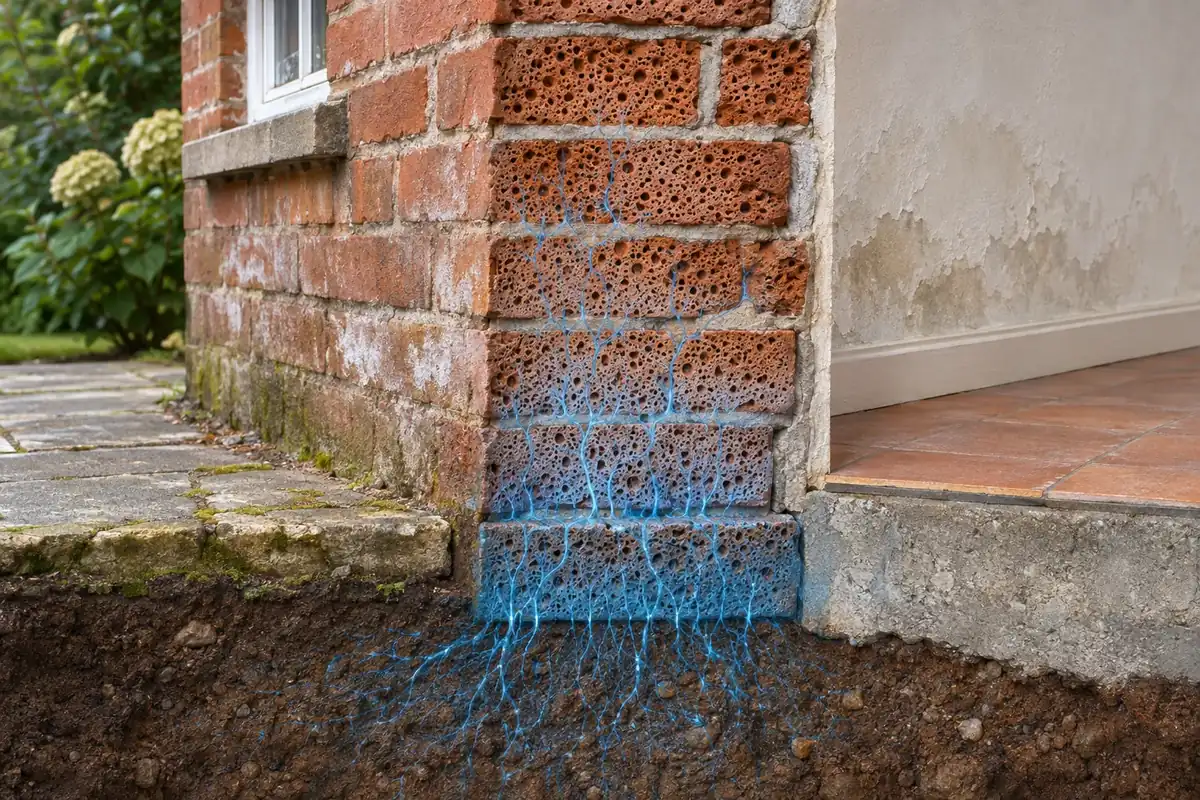
What does injection into masonry involve?
An injection system for rising damp involves holes and a product applied according to its manufacturer’s instructions. Permitted materials, hole diameter and spacing, depth and preparation are specific to the process. SikaMur InjectoCream-100 documentation is one example to examine; it does not describe all injection systems.
What may complicate the work?
A thick, irregular or heterogeneous wall calls for checks of system suitability. It does not prove that every injection will fail. Ask how voids, joints, face access and treatment continuity are addressed. Repeated drilling alters the substrate locally; alone it does not demonstrate structural weakening. Separate treatment, access, protection, filling and finish repairs in the budget. Compare detailed quotations and exclusions, rather than assuming an entire treatment family is always expensive.
ATE and ATG: installation without an injection line
Humidistop devices offered by Humidité Conseil for rising damp do not require injection of a product into masonry. That does not mean every installation is drill-free: fixings and location must follow the model instructions. There is no universal mounting height to copy from a photograph. ATE needs mains power; ATG operates without electrical power. Compare stated coverage on a plan, substrate, access and instructions. A commercial technology description alone does not predict a building’s result.
What neither intervention replaces
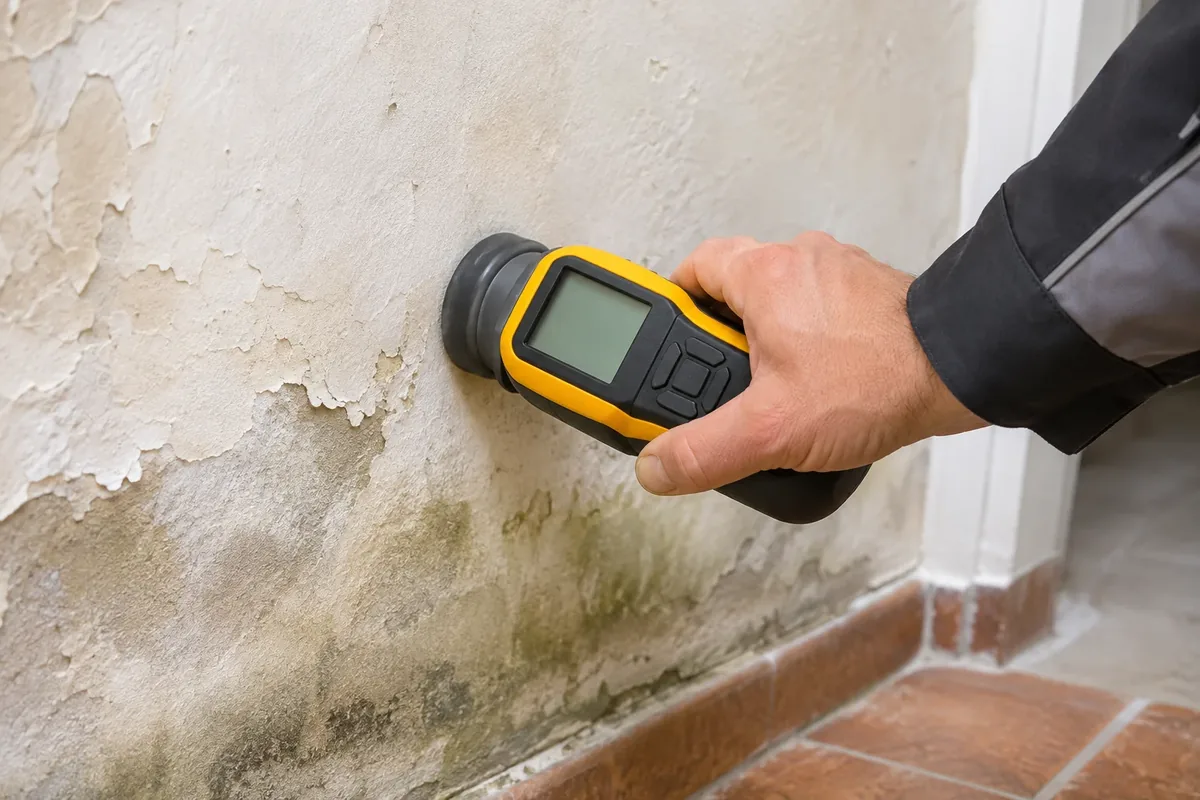
Leaks, water ingress and inadequate ventilation need action on their causes. A rising damp device does not repair those problems. Neither device installation nor injection automatically restores damaged plaster or removes all existing salts. Plan repairs and appropriate monitoring separately. No single drying period fits every wall: materials, water, salts, finishes and building conditions matter. Keep dated photographs and monitoring locations. A dry appearance or isolated electrical reading does not prove complete drying.
Frequently asked questions
Are injection constraints identical for all walls? No: composition, thickness, condition and access must be assessed against the process documentation and contractor’s method. Does a device avoid all work? It avoids a line of product injection, but mounting may require drilling. Repairs to leaks, substrates or finishes may still be necessary.
Compare and order from Humidité Conseil
If rising damp is confirmed and model conditions are suitable, explore ATE LC30, compare ATE and ATG and visit our shop. Ask our team product questions before choosing and read the guides on moisture causes and monitoring.
Compare devices in our shop · Explore ATE LC30 · Ask for product advice
Watch the ATE installation video
SikaMur InjectoCream-100 — product instructions, France, November 2025 (French)