Rising damp or condensation: choosing an ATE device
Start by asking whether the marks come from rising damp or another source of moisture. Humidité Conseil helps you organise your observations and examine ATE devices for their intended use. Read the comparison, model documentation and installation tutorial before preparing your order.
Observe the marks without jumping to a conclusion
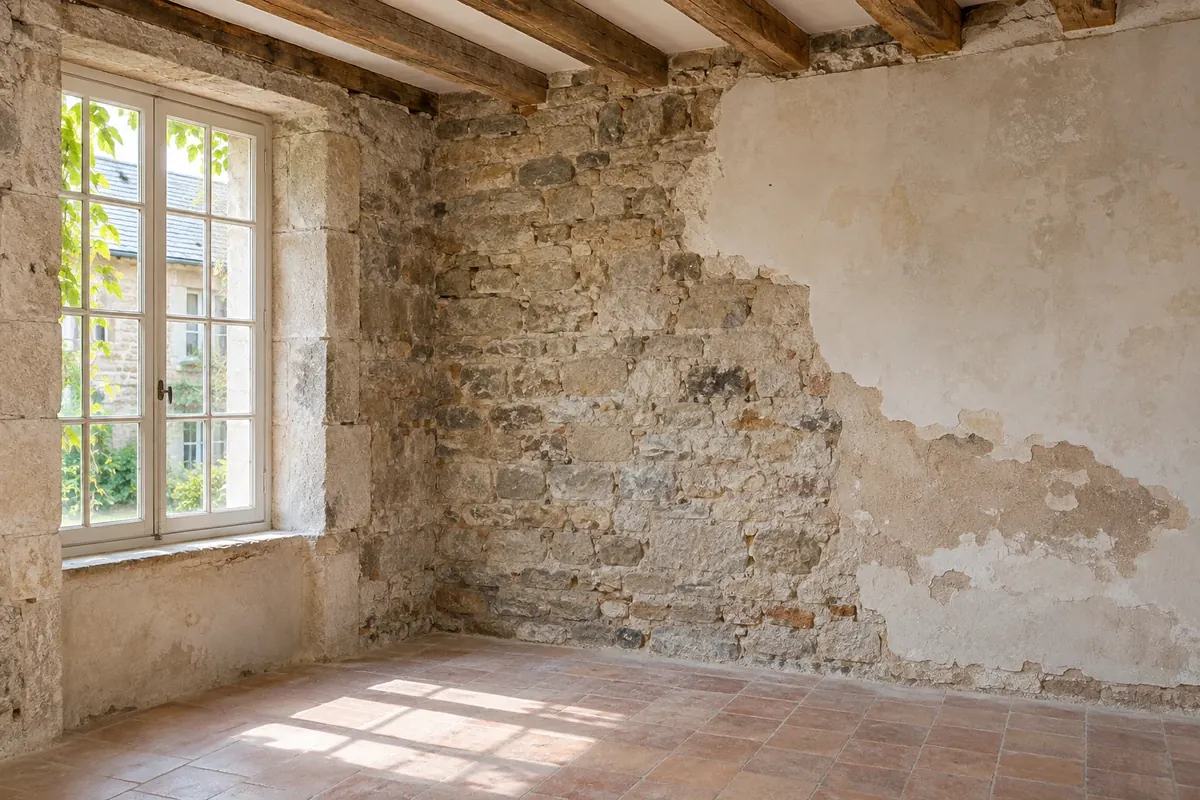
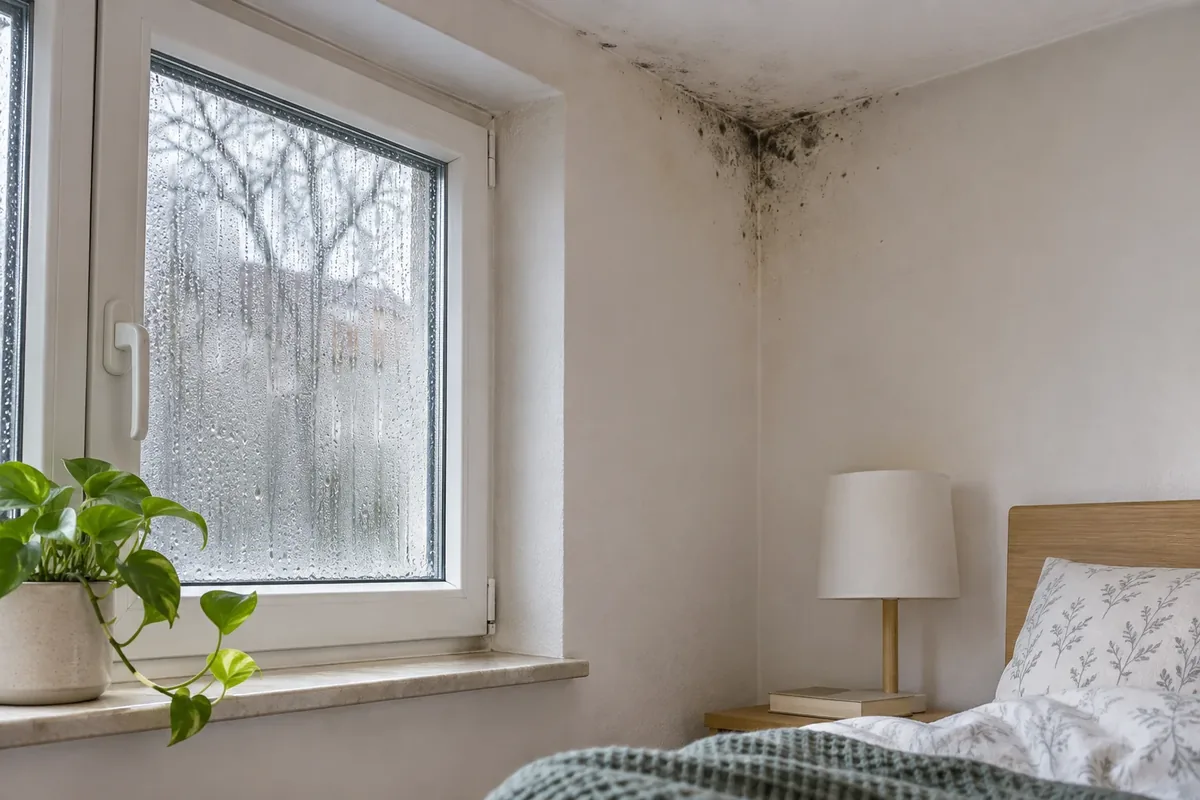
The location and development of the marks provide useful information. Record the affected walls, salt deposits, finishes and associated events. A mark at the base of a wall does not rule out a leak or water ingress. Condensation requires a different investigation, including indoor air and surface conditions. Where several causes coexist, one device cannot address every problem.
Distinguish treatment from finishing work
ATE devices are offered for rising damp; repairing render or applying paint serves a different purpose. Consider the whole project: the source of the water, the proposed intervention, monitoring and finishing work. Consult the product instructions when considering an approach without resin injection into the wall. The substrate and its condition also determine which renovation work needs to be planned.
Read coverage figures using the right units
Radius, diameter and area are different quantities. Diameter is twice the radius; coverage stated in metres is not an area in square metres. Consider the stated figure in relation to the installation point and room layout. This gives you a clearer basis for comparing an LC15, LC30, LC30 PULSE or MAX.
Compare ATE devices
| Model | Stated diameter | Power supply |
|---|---|---|
| ATE LC15 | 15 m | Mains power |
| ATE LC30 | 30 m | Mains power |
| ATE LC30 PULSE | 30 m | Mains power |
| ATE MAX | 60 m | Mains power |
These diameters are coverage figures stated by the manufacturer. They are not floor areas in m² and must be considered alongside the building layout and installation position. Read the instructions and specifications for the exact model before ordering.
Prepare installation and monitoring
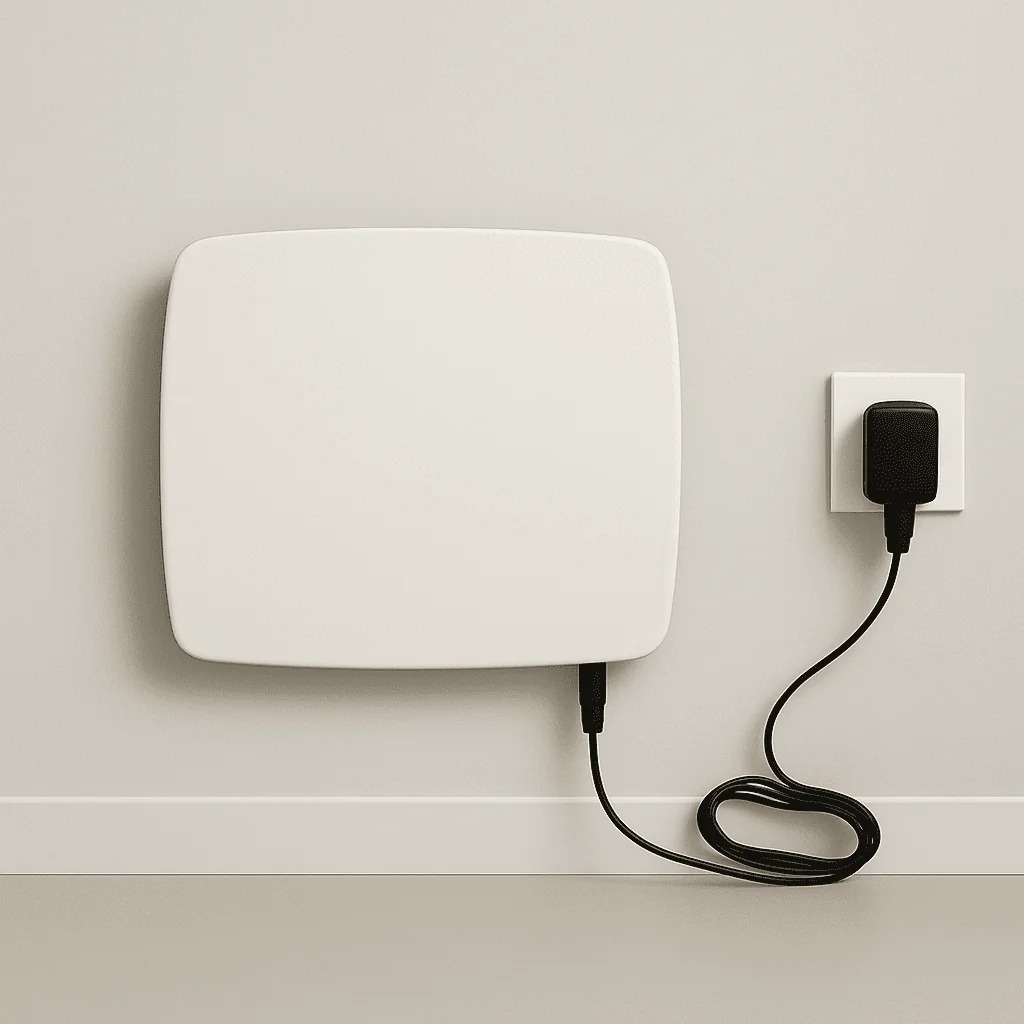
Watch the ATE video to see the installation steps, then follow the instructions for your model. Check the support, position and power connection requirements. Changes in the walls depend on factors including materials, thickness, finishes and ventilation. Keep comparable observations and plan finishing work according to the actual condition of the substrate.
Frequently asked questions
Does an ATE address every type of damp?
No. Its intended use is rising damp. Leaks, water ingress and condensation require measures suited to their causes.
Is an electrical socket needed?
Yes, for the ATE range. Follow the power supply and operating instructions for the exact model.
Can I repaint as soon as the device is installed?
Installation does not demonstrate that the wall is dry. Check the substrate before finishing work and arrange appropriate monitoring.
Compare Humidité Conseil devices · Discover the ATE LC30 · Ask for product advice
Watch the ATE installation video
Related guides
Distinguish the causes of damp · Compare ATE and ATG devices
Technical reference for investigating moisture in traditional buildings: Historic England, RICS and PCA — England, 2022