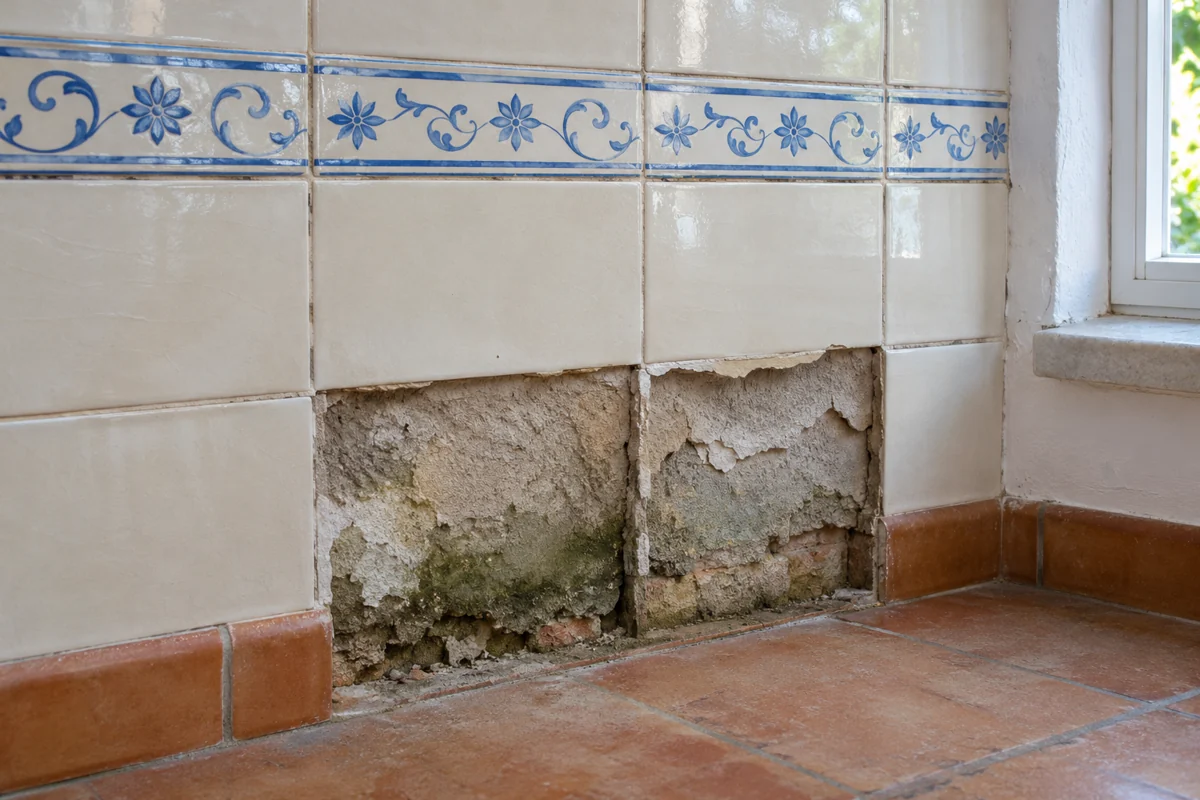
Avoiding resin injection: questions before choosing an alternative
Wanting to avoid resin injection can reflect heterogeneous masonry, a wish to preserve a wall face or constraints in an occupied building. Describe those constraints before comparing alternatives: a preference alone neither rules out a method nor proves another is suitable.
Turn a preference into verifiable criteria
Specify what you want to avoid: repeated drilling, dust, access from one side only, products introduced into the masonry or repairs to finishes. A contractor can then explain the practical implications of the proposed work. Ask how rising damp has been identified. Avoiding injection does not correct a mistaken diagnosis; a leak or water ingress needs action at its source.
Compare the limits of each proposal
For injection, ask about suitability for the substrate, the wall construction and the implementation procedure. For a device, check the technology, stated coverage and installation conditions. ATE and ATG do not inject resin into the wall, but this does not mean every installation involves no holes: fixings and the actual model instructions still matter. ATE needs mains power; ATG requires no power supply.
Request a monitoring plan
Compare the proposed observations and measurements, together with any necessary finish repairs. A broad promise is less useful than a clear account of the actions, limits and follow-up. Choose in relation to the materials and the identified cause. If the cause is uncertain or proposals conflict, seek a competent technical assessment: the objective is an appropriate solution for the building, not the exclusion of an entire family of methods.
Compare the conditions before ordering
Explore ATG LC30, the model instructions and the other devices in our shop. Share the building dimensions, wall construction and installation constraints when asking for product advice. A device offered for rising damp does not repair leaks or water ingress. Assess its intended use and stated coverage before buying.
Compare and order our devices · Explore ATG LC30 · Ask for product advice
Watch the installation guidance