Drying a wall after water damage: checks before painting
After water damage, first stop the water supply and identify the affected materials. Drying time cannot be inferred from the size of a stain alone. Masonry, insulation and plasterboard may need different checks and decisions.
Separate the repair from the drying process
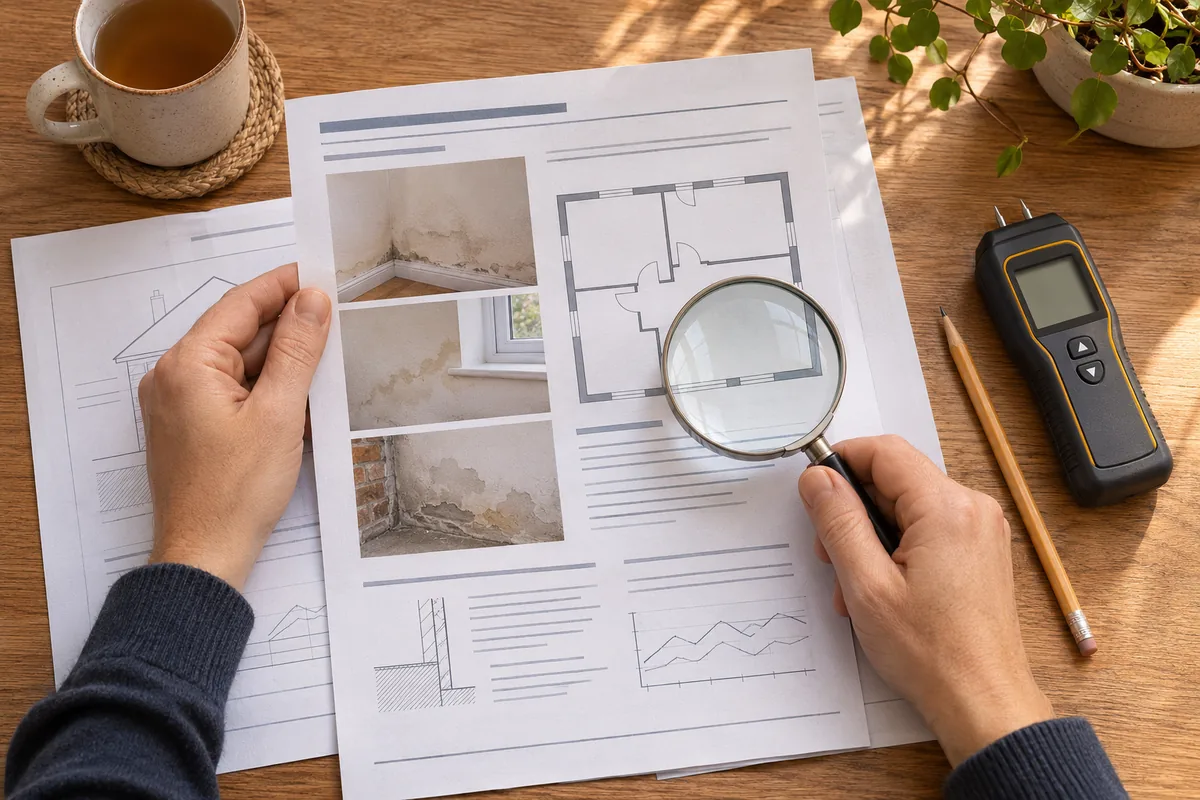
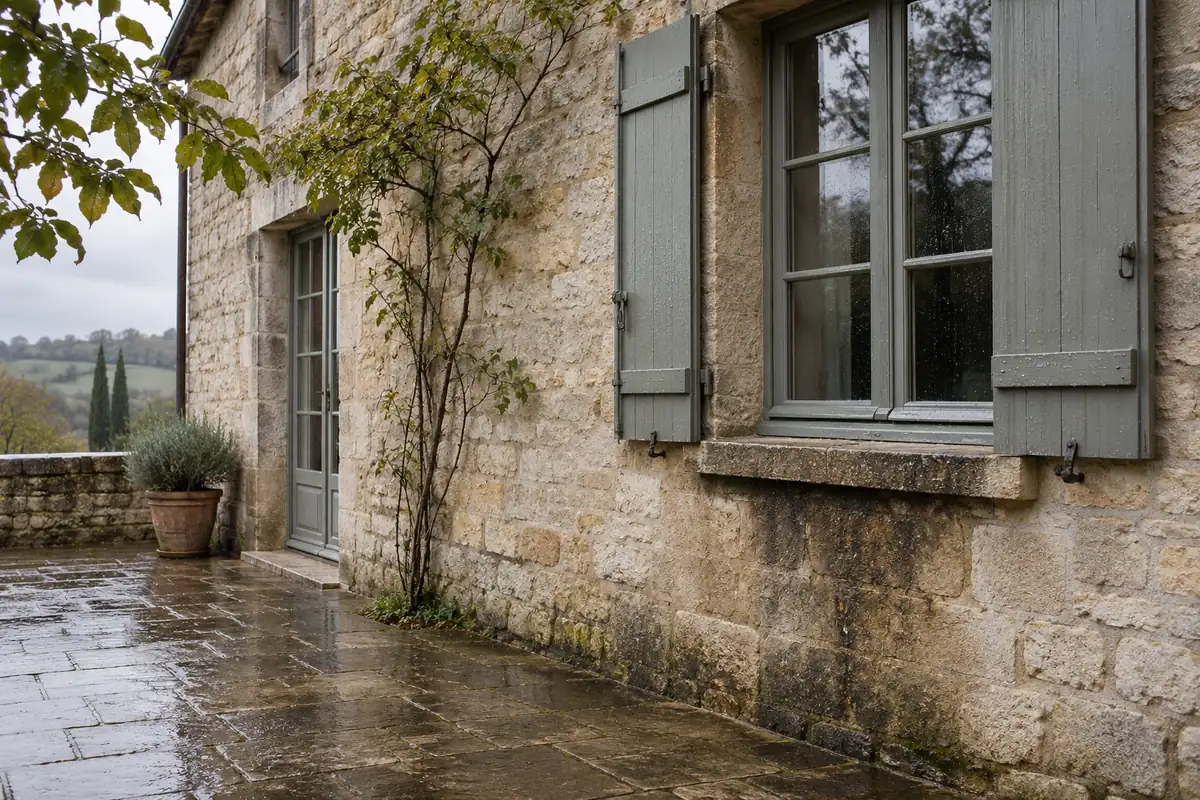
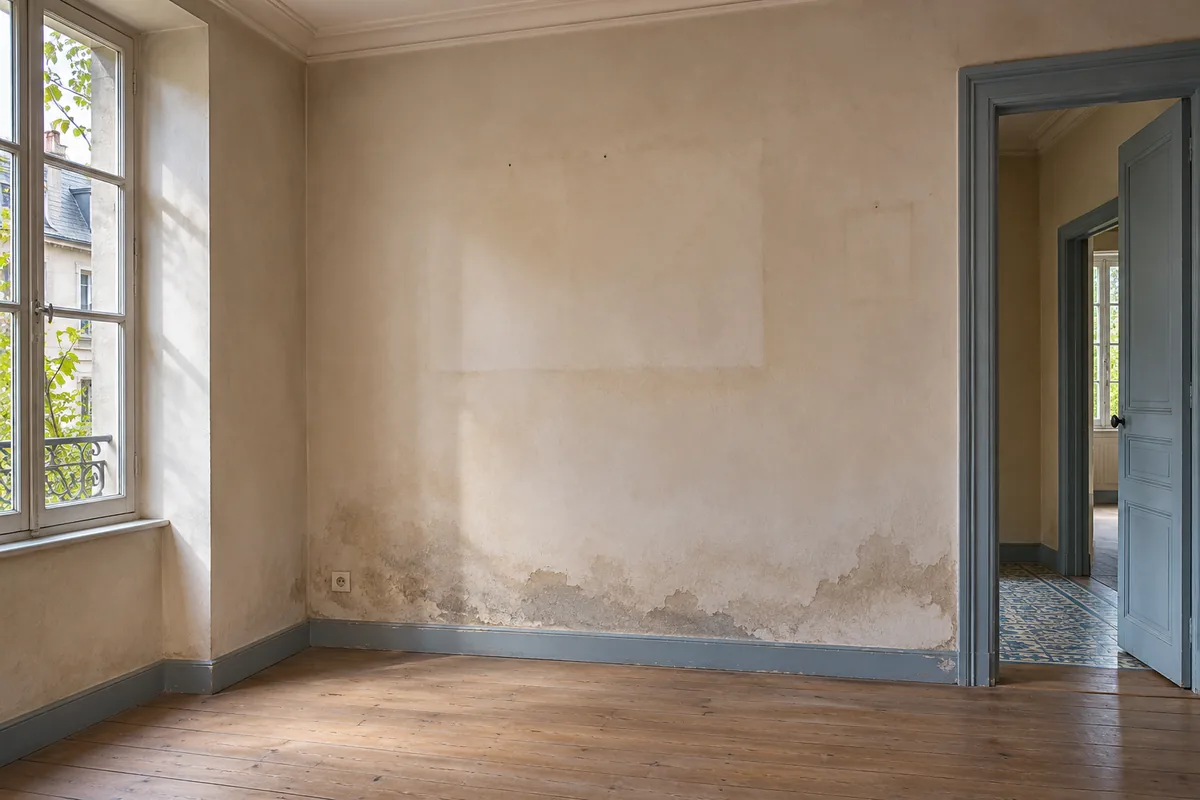
Check that the leak or entry point has been repaired. Keep dates, intervention records and observations. If a mark changes after rain, reassess the possible source rather than automatically treating it as residual moisture. A wall lining may conceal materials that remain wet. Targeted investigation may be needed to determine the extent of damage; do not extrapolate one reading to the entire home.
Monitor the same substrates
Mark measurement points and reference areas. Record the method, substrate and conditions. Air readings and material measurements describe different things. Surface instrument readings are often comparative and must be interpreted for the materials; they do not automatically prove drying within the wall. Paint returning to a lighter colour is a visual clue, not a complete check.
Choose measures according to the cause
ATE or ATG equipment offered for rising damp does not replace leak repair or a drying programme appropriate to water damage. It should not be chosen automatically after flooding. Before closing a lining or repainting, have the substrate checked for compatibility with the planned finish. Timing depends on the water present, materials, ventilation and site conditions; no single period fits every incident.
Review product conditions before choosing
If a separate rising damp problem is identified, consult the relevant ATE or ATG specifications and instructions. Our team can help relate product information to your building. Compare the devices and our rising damp guides while keeping incident repairs and any device selection distinct.
Compare devices in our shop · Read the ATE LC30 specifications · Ask for product advice
Watch the ATE installation video