Damp homes: five similar-looking situations needing different responses
Searching for home damp brings up ventilation, dehumidifiers, paints, waterproofing work and wall devices. They do not address the same mechanism. Begin by distinguishing five situations that can leave similar marks.
Humidité Conseil helps prepare this distinction. Observations guide checks; they do not replace on-site assessment when several causes remain possible.
1. Indoor air and cold surfaces
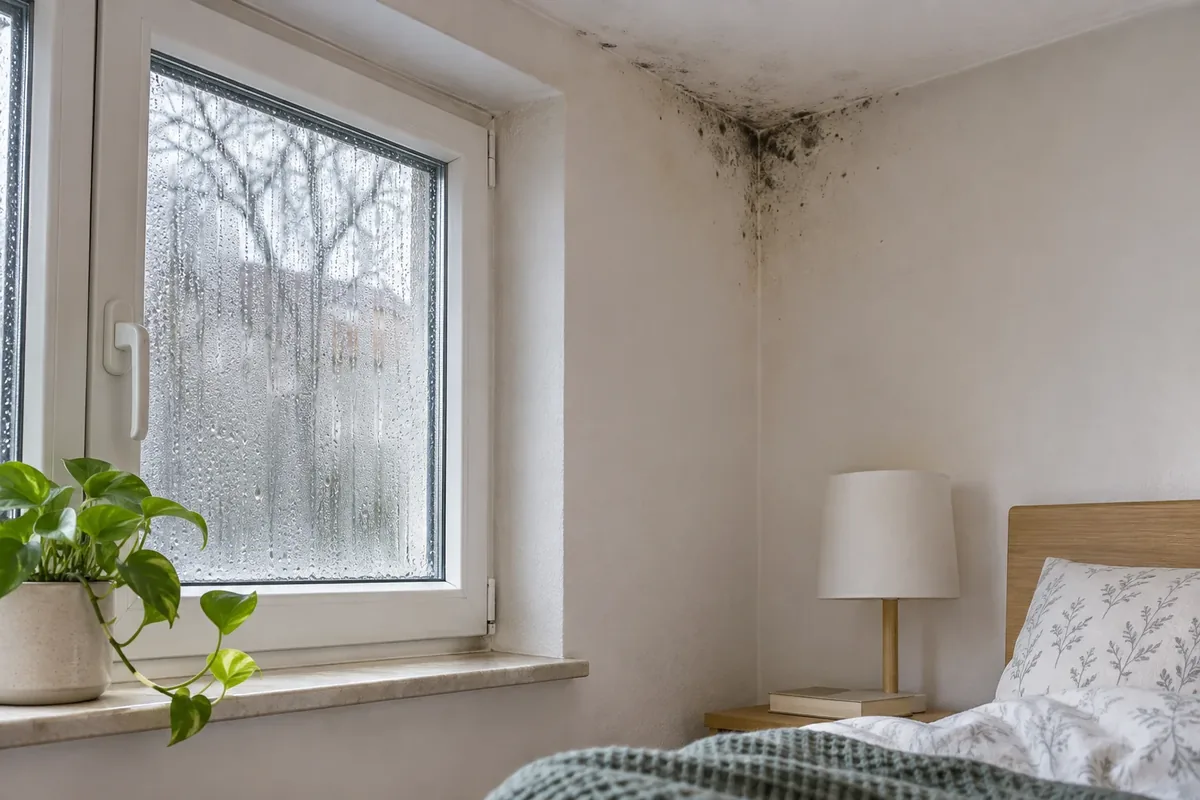
Drops on windows, marks in corners or behind furniture call for examination of condensation conditions. Relate vapour-producing activities, air renewal and surface temperatures. One room reading does not describe all these factors.
Record temperature and relative humidity at different times with uses and ventilation. These values concern air, not direct water content in the wall. Appropriate action may require checking ventilation and thermal bridges.
2. A leak in an installation
A mark near a bathroom, pipe or below a serviced room deserves specific investigation. Proximity does not prove a leak but justifies checking before a masonry treatment. Repair the source if a leak is identified.
Keep the repair date and initial condition. Materials can take time to dry and damaged finishes do not repair themselves. A residual mark differs from a new water supply.
3. Water entering from outside
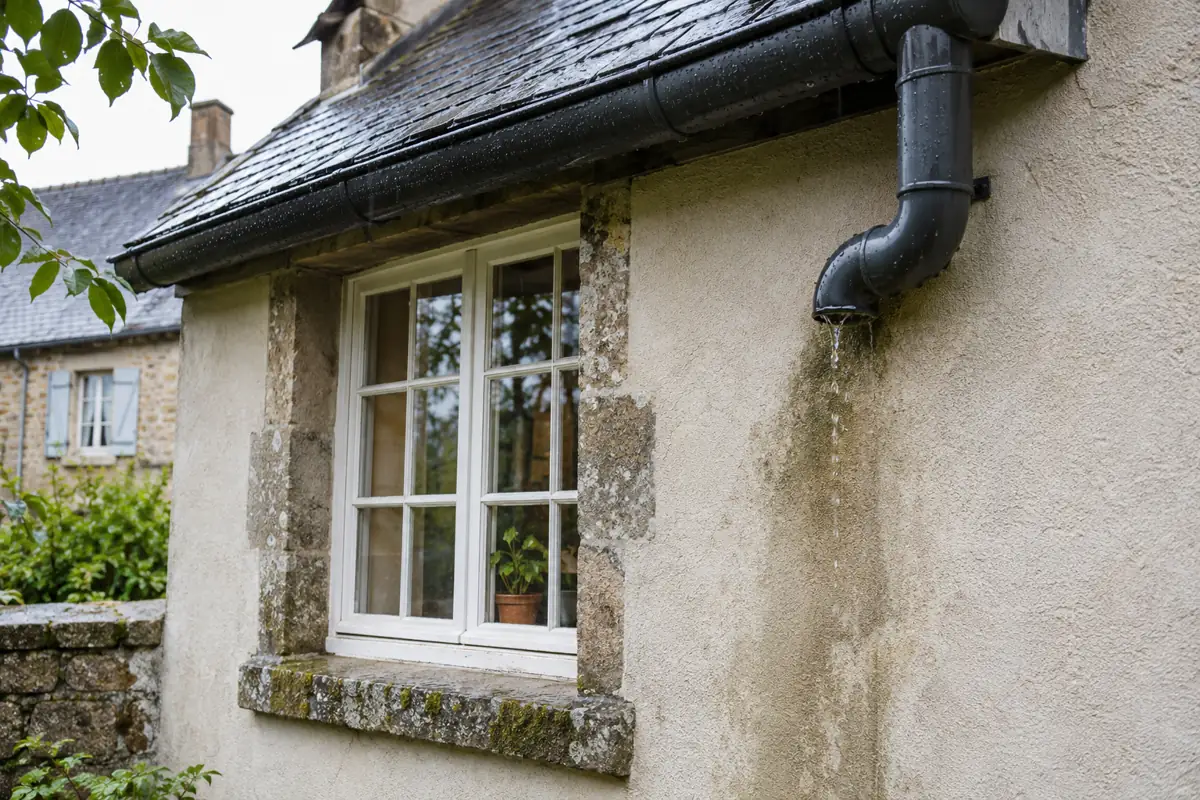
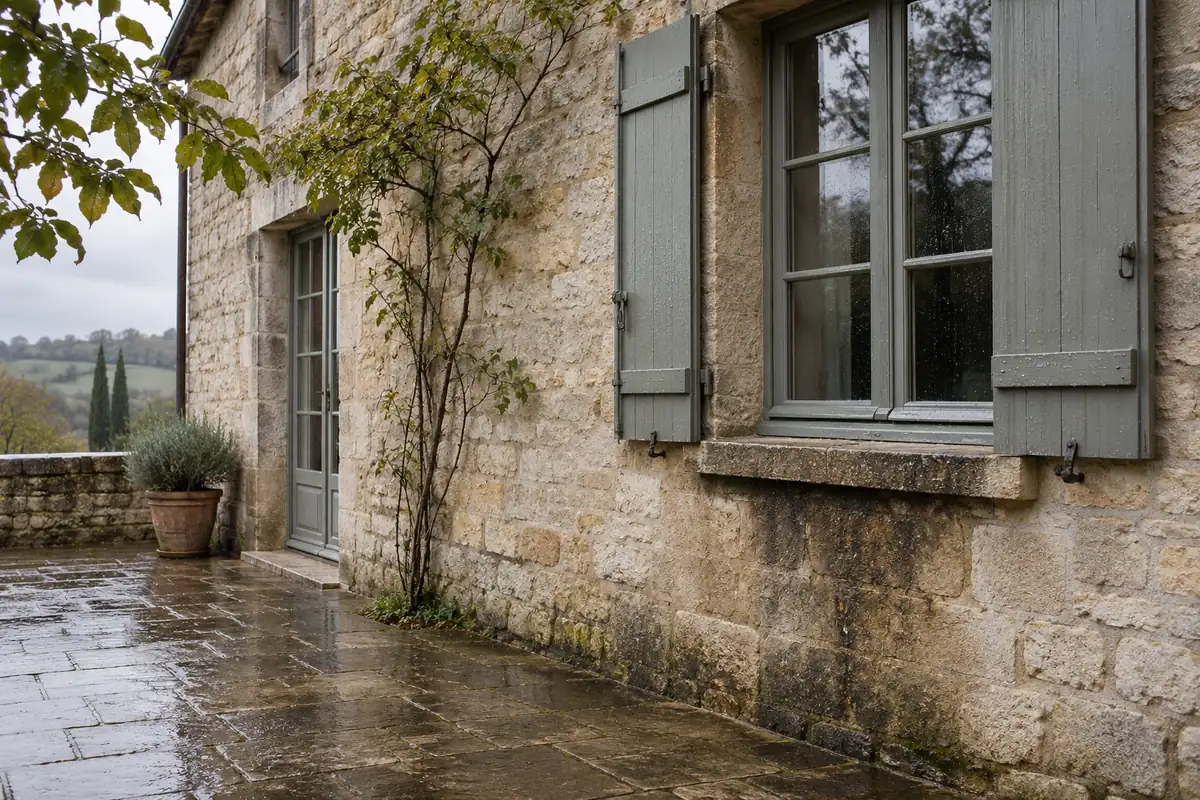
If changes seem linked to rain, compare both wall faces and outside context where access is safe. Façades, connections and buried walls can require different checks. Lateral ground water entering a cellar is not automatically rising damp.
The response must address the identified path. Interior paint or a device chosen without examining that path does not replace action appropriate to the entry point.
4. Rising damp
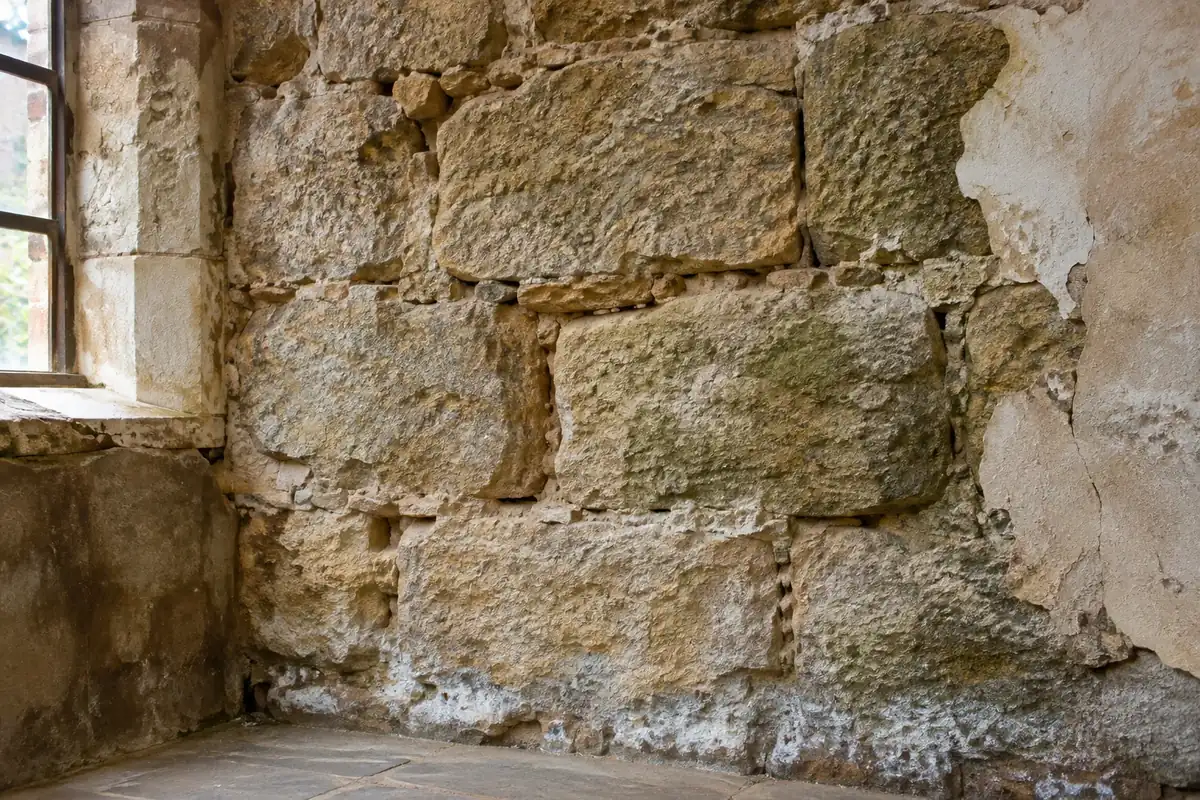
Capillarity involves water movement through material pores from a damp zone in contact with the ground. Low damage can be compatible without being sufficient proof. Examine ground levels, protection and recent work.
Ask which evidence confirms this cause and what alternatives have been excluded. A proposed treatment should state intended use, limitations, available documents and monitoring.
5. Effects of existing salts
White deposits commonly called saltpetre can involve different salts. Some absorb air moisture and keep affecting surfaces. Finishes can therefore remain marked after liquid water conditions change.
Salts also affect some electrical readings. Distinguish the water source, salt presence and plaster condition. This helps plan finishes without treating every mark as proof of the same active problem.
Prepare your enquiry
| Observation | Information to add | Useful question |
|---|---|---|
| Wet glazing | Time, temperature, room use | Check air and cold surfaces? |
| Mark after rain | Outside view and appearance delay | Which water path needs checking? |
| Low damage | Ground contact and plan | Rising damp, leak or lateral ingress? |
| White deposit | Substrate, work and evolution | What role do salts play? |
Where do ATE and ATG fit?
Humidité Conseil offers ATE and ATG for walls affected by rising damp. These are not universal solutions for all five situations. They do not replace leak or ingress repairs or necessary air renewal.
If considering them, prepare a plan and compare instructions, coverage, power and monitoring. ATE uses electricity; ATG operates without electrical supply. Diameter is not floor area. Evidence must match the performance being assessed: electrical conformity alone does not demonstrate an outcome in your building.
Frequently asked questions
Can several causes affect one room?
Yes. The plan should then explain which actions address which mechanisms.
Is an electrical test sufficient?
No. Interpret it according to instrument, material and salts, alongside building observations.
What should I prepare?
A plan, photographs and dated history help prepare product advice and the checks needed before choosing.
Related guides
- Distinguish the causes of damp
- Compare ATE and ATG devices
- Plan documented wall monitoring
- Understand electrical moisture readings
Compare devices and order in our shop · Ask for product advice by email
Technical reference: Historic England, RICS and PCA — England, 2022
Buildwise — hygroscopic salts and finishes (Belgium; French)