Damp stone walls: investigate before hiding useful clues
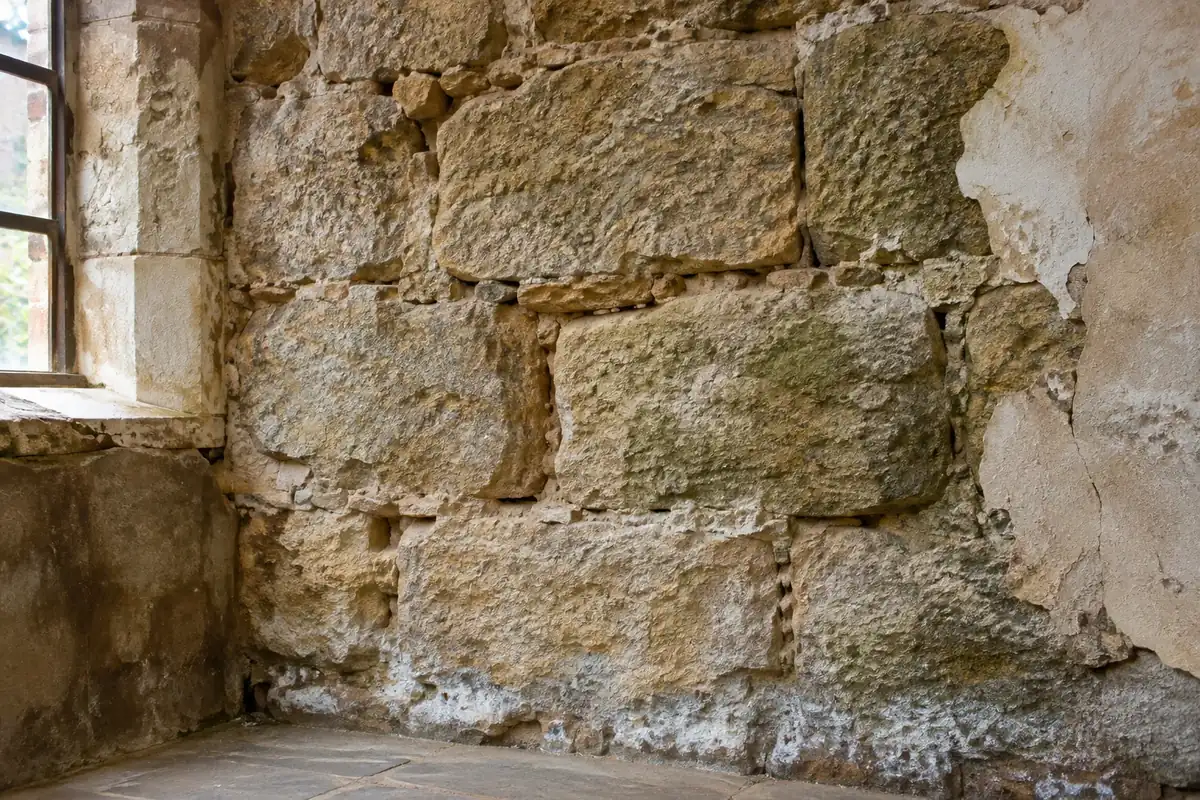
In an older home, a stone wall may be covered by several generations of plaster and linings. Before looking for a drying solution, examine both accessible faces and the history of alterations. Visible stone alone does not explain the water’s path.
Describe damage and alterations
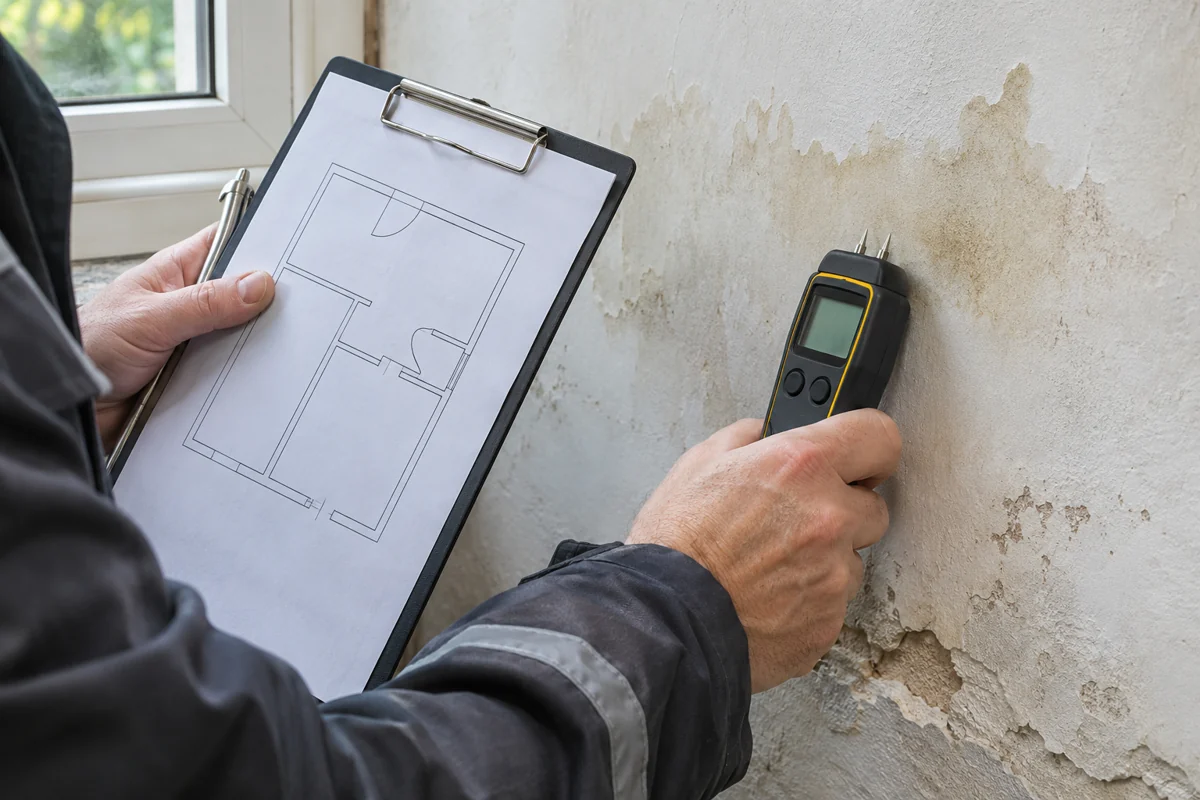
Record mark heights, white deposits and drier areas. Note renovations, a nearby terrace, outside ground levels and water flows after rain. Avoid immediately covering damaged sections. Dated photographs and a record of materials help the investigation. Any removal or opening should be defined according to the building condition and necessary checks.
Distinguish mechanisms before treatment
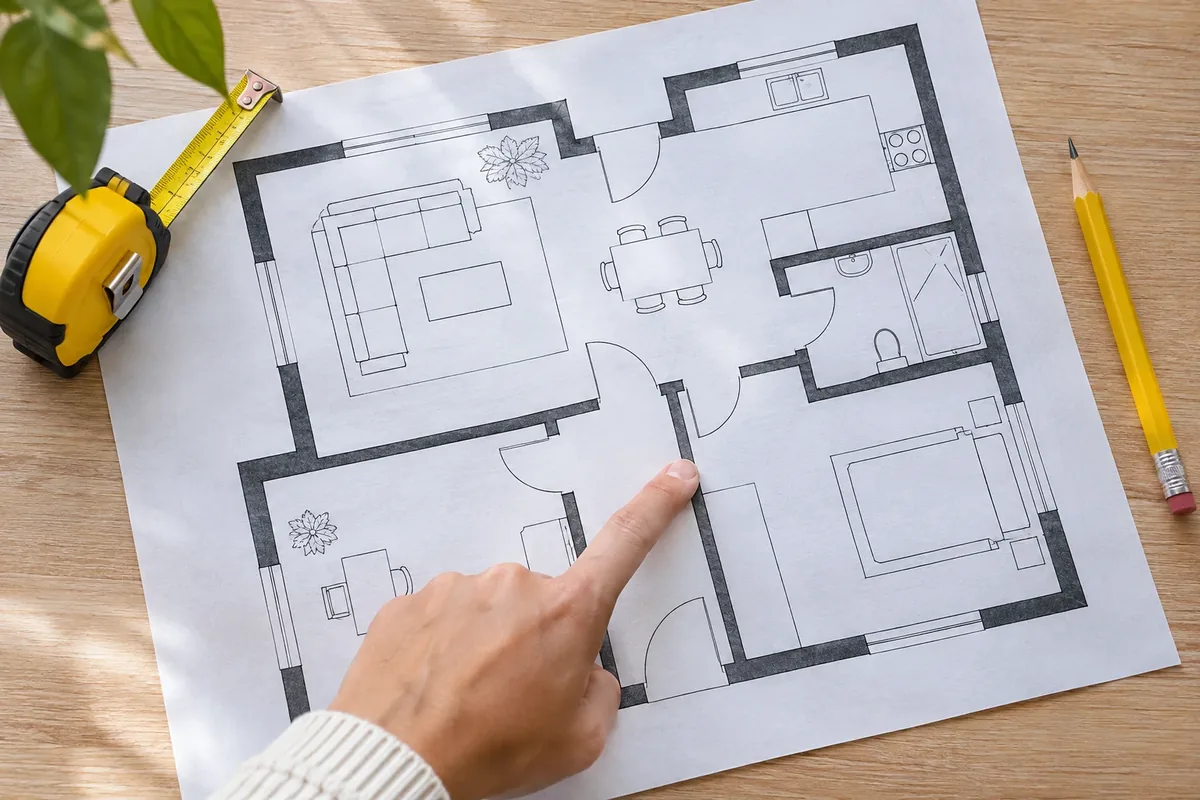
Rising damp, lateral ingress, leaks and condensation can overlap. A high reading on a facing describes the tested area; it does not automatically reveal the condition of masonry behind a lining. If rising damp is identified, the plan and installation conditions can be studied to consider ATE or ATG. These devices do not remove the need to correct rainwater directed towards the façade.
Schedule repairs around monitoring
Restoration materials must be compatible with existing masonry and exposure conditions. A finish with low permeability on a still-damp substrate may move or conceal visible symptoms. Schedule finishes according to the resolution of causes and wall evolution. Ask for an appropriate checking method: a dry-looking surface or a single reading alone does not demonstrate complete drying.
Compare conditions before choosing
Consult the specifications and instructions of the ATE or ATG model under consideration. Share the plan, material observations and constraints with our team for product advice. Explore our shop and rising damp guides while keeping the investigation, any water-source repair and compatible finishes in the project.
Compare devices in our shop · Explore ATE LC30 · Ask for product advice
Watch the ATE installation video