Ponsonnas church: two sampling points monitored from 2015 to 2017
In an old church, wall condition cannot be assessed from paint appearance alone. At Ponsonnas in France, the Humidistop project file compares two stone samples between installation and the later check.
From the initial visit to installation
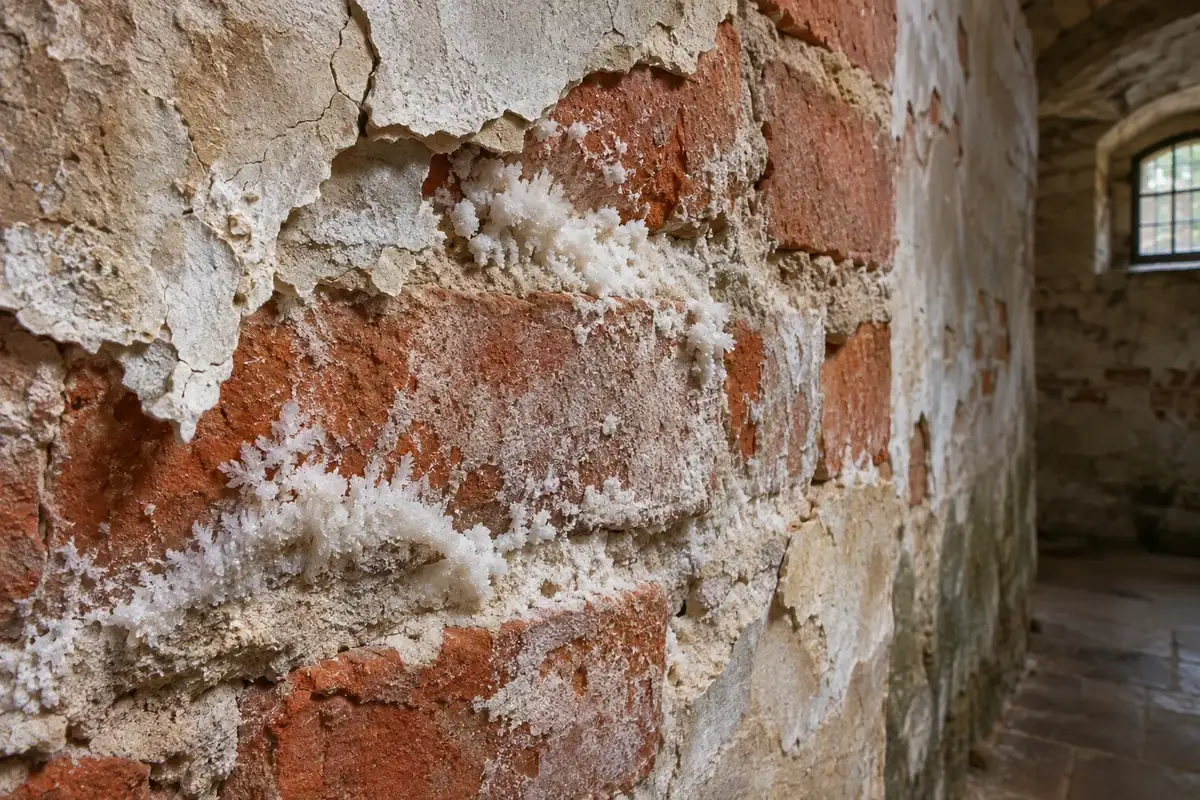
The January 2015 assessment describes stone masonry, moisture marks and cement-based coatings. Installation took place on 4 May 2015. The file identifies an electromagnetic process with a stated 45-metre coverage diameter. This reference concerns ATE technology, distinct from the geomagnetic ATG installations in other projects.
Changes recorded on two walls
At both visits, the table specifies sampling at a height of 30 cm and a depth of 20 cm. The recorded calcium carbide values decrease at the two monitored points.
| Area | 4 May 2015 | 26 May 2017 |
|---|---|---|
| Right wall | 6.4 g/100 | 3.5 g/100 |
| Left wall | 6.0 g/100 | 2.0 g/100 |
Local values recorded in the check report using calcium carbide testing.
A check accompanying the project
The report describes walls and floors as drying. It recommends keeping the device in position and continuing to air the building. The value of this reference lies in the continuity of the file: an assessment, dated installation and a check retaining the initial values. Two measured points make the recorded evolution visible without representing the whole church.
Before and after renovation
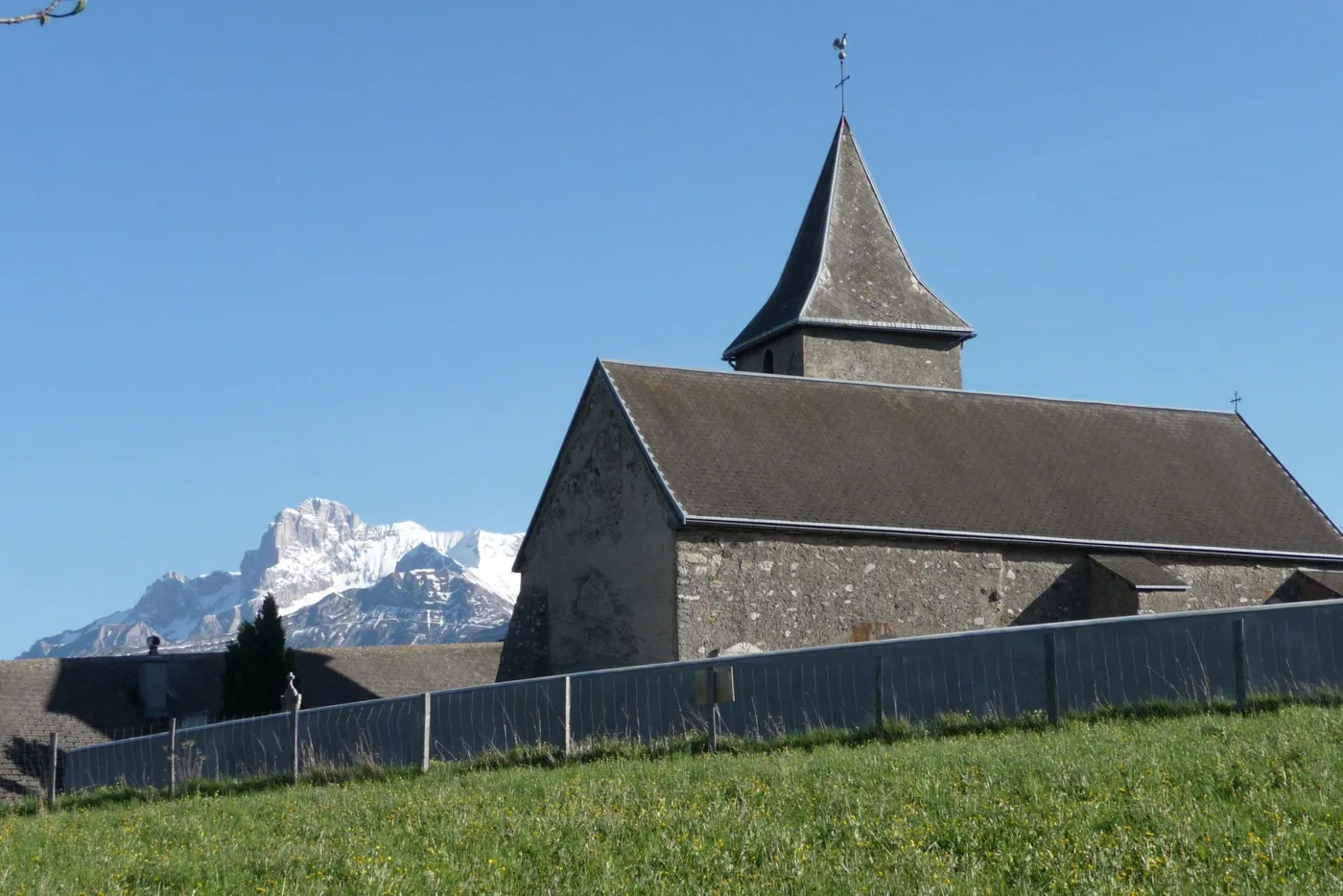
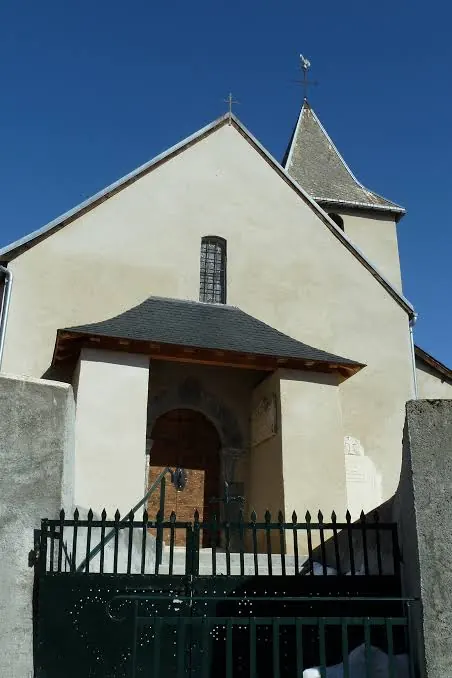
The photographs show different angles: a grey-stone side view before renovation, then a light-coloured front façade afterwards, according to the supplied identification. Capture dates are not established. These images illustrate renovation; the table separately documents moisture evolution at the sampled points.

Related guides
Prepare installation using the instructions · Compare ATE and ATG
If rising damp is confirmed, compare our device specifications and documents before choosing.