White salts on walls: identify the cause before treatment
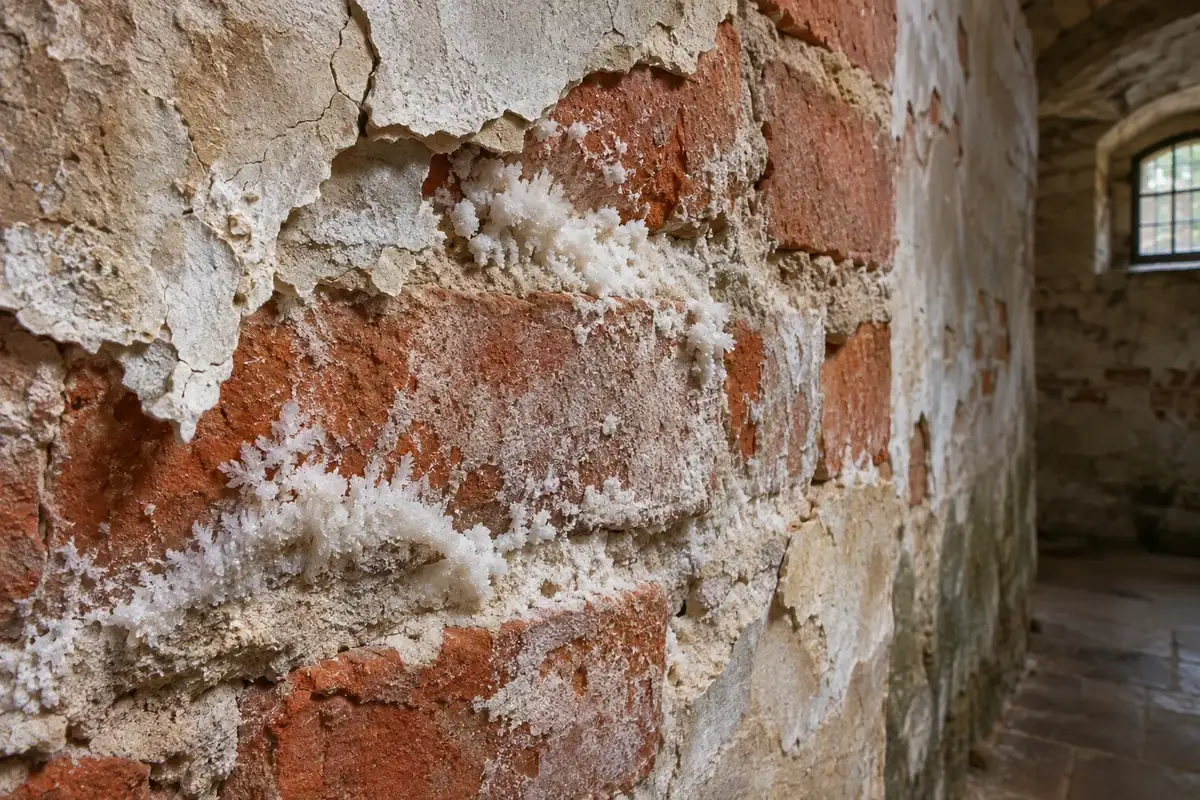
White deposits often called saltpetre do not, by themselves, establish the source of moisture. Distinguish the salts, any ongoing water supply and finish condition. Cleaning changes appearance; it is neither a diagnosis nor treatment of the cause.
What does saltpetre mean here?
Common usage covers several white efflorescences. Water can transport salts through masonry and leave deposits as it evaporates. Crystallisation may also affect pores and contribute to deterioration. Appearance does not identify chemical composition; suitable testing may be necessary.
Some hygroscopic salts absorb moisture from air. A finish may therefore remain marked after liquid-water conditions change. Salt presence and an active source are separate questions.
Which clues should be recorded?
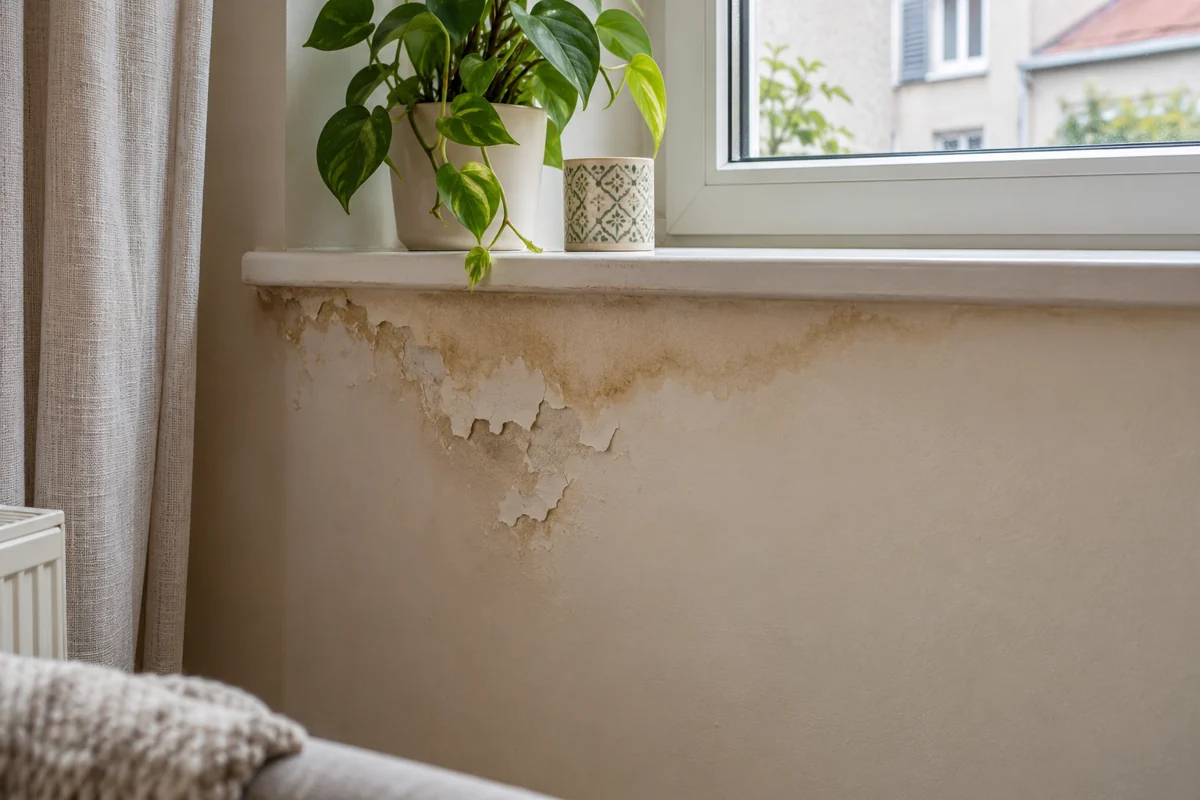
Photograph deposits, peeling paint, friable plaster and surrounding areas. Record date, height and circumstances: rain, heating, wet-room use or repairs. Smell, coldness or a damp feel does not establish salt composition.
Low damage can suggest rising damp, but leaks or lateral ingress remain possible. Mould is not a mineral deposit; colour alone nevertheless does not distinguish every mark or exclude several mechanisms coexisting.
Investigate water before choosing a product
Examine ground contact, outside levels, rain correlation, pipes and accessible wall faces. Condensation needs study of air, ventilation and surfaces. Ask what confirms the cause and which possibilities remain.
An electrical reading is not automatically a water percentage for every material. Salts can affect readings. If water content needs quantifying, a professional selects an appropriate method and explains its limits.
Cleaning and finishes are separate tasks
Keep a baseline before cleaning. Adapt the method to the deposit, substrate and any product instructions; do not assume every white deposit is a residue simply to brush away. A clean surface does not prove the problem has gone.
Do not paint a friable or poorly understood substrate. The finishing professional assesses cohesion, salts, preparation and compatibility. Some cases need a system separating the finish from masonry. Do not choose solely to conceal marks or routinely remove water protection to let the wall “breathe”.
The role of ATE and ATG
If rising damp is confirmed, Humidistop devices offered by Humidité Conseil can be compared for this use. They do not chemically remove existing salts, restore detached plaster or replace leak and ingress repairs or necessary ventilation.
ATE requires electrical power; ATG operates without it. Compare model, stated coverage and instructions with the plan. Diameter is not area and mark height alone cannot size a device. Mounting follows model instructions and may involve drilling.
Monitor before redecorating
Keep marked locations and record changes to finish, method or instrument. Readings must remain interpretable. Persistent marks may involve salts or damaged materials without proving an active source. Conversely, lighter paint does not certify complete drying. No universal period defines when to refinish.
Read the guide on salts returning after painting, compare ATE and ATG and explore devices in our shop. Ask the team product questions before choosing.
Related guides
- Distinguish the causes of damp
- Compare ATE and ATG devices
- Plan documented wall monitoring
- Understand electrical moisture readings
Compare devices and order in our shop · Ask for product advice by email
Technical reference: Historic England, RICS and PCA — England, 2022
Buildwise — hygroscopic salts and finishes (Belgium; French)
White salts returning after painting
Confirmed rising damp? Compare our Humidistop devices