After a repaired leak: do you need an ATE or ATG wall dehumidifier?
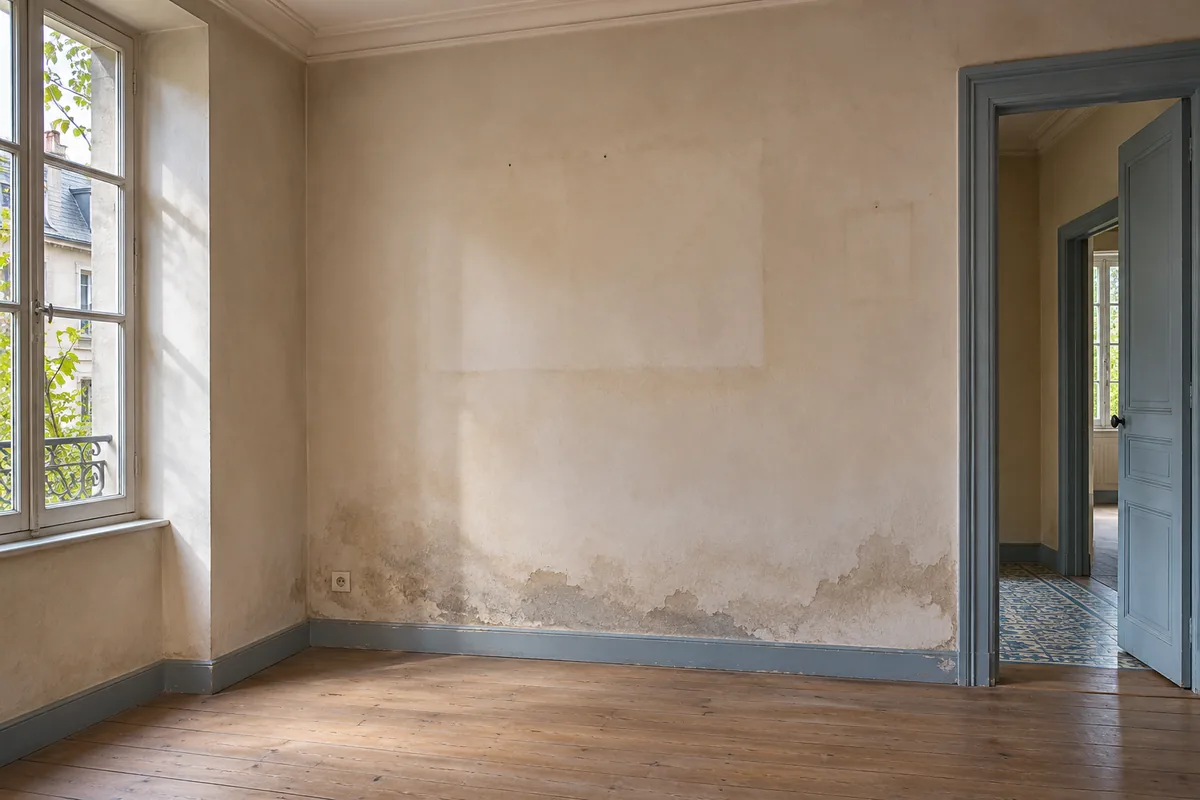
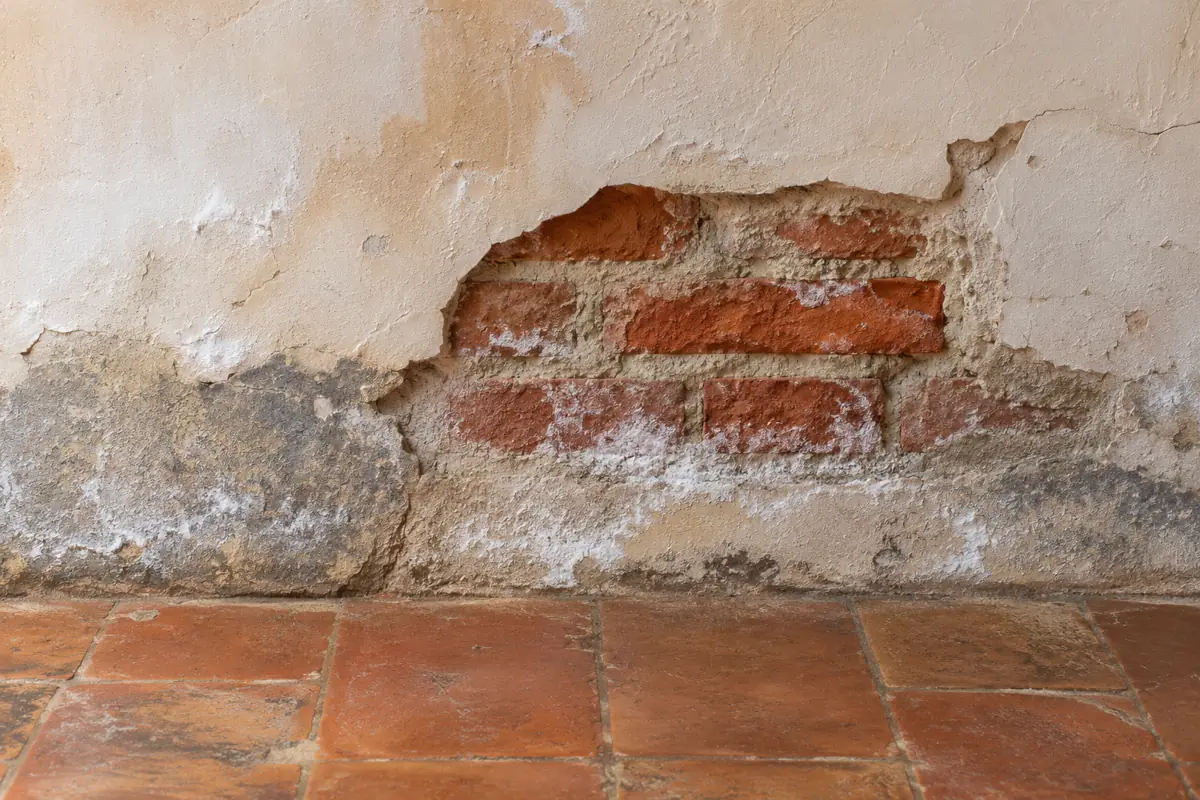
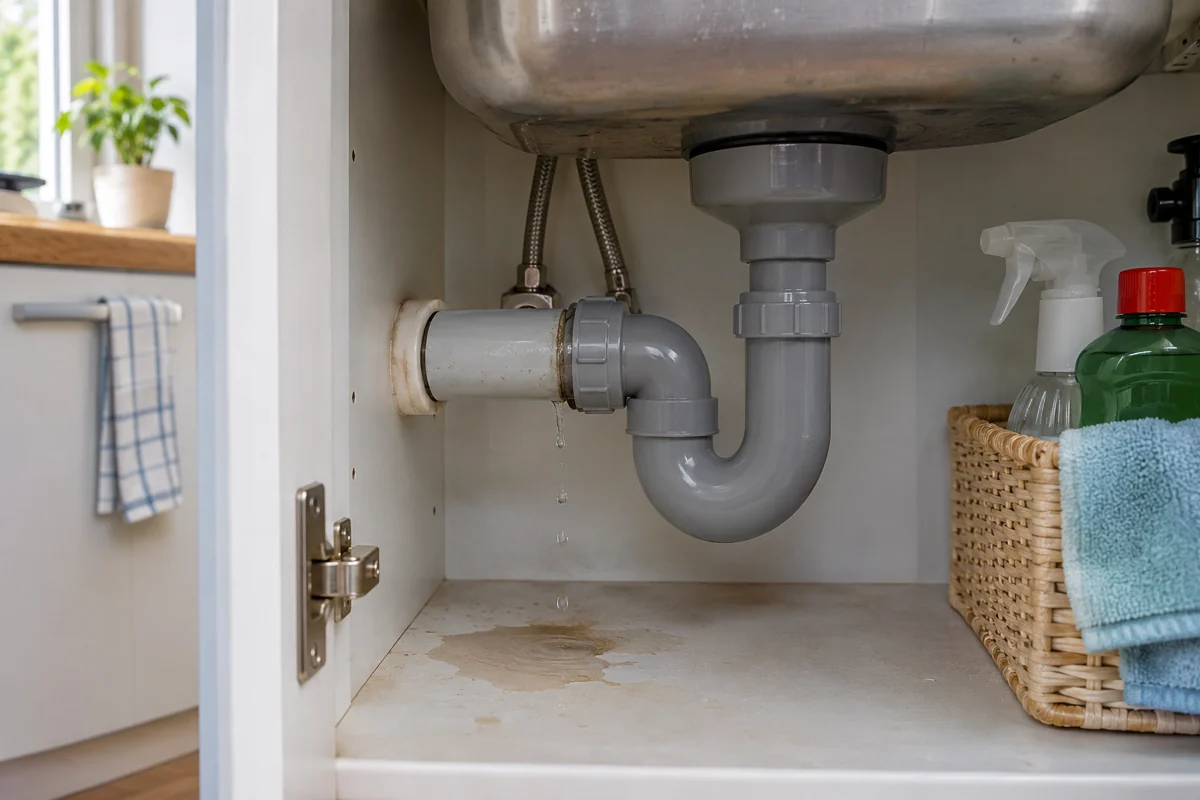
The leak has been repaired, but a stain or damaged plaster remains. Does that mean you should buy a wall dehumidifier? The answer depends on the source of the remaining moisture. Humidité Conseil considers ATE and ATG devices for identified rising damp, not as a replacement for repairing a leak or as an equivalent to a building-site air dehumidifier.
First confirm that water entry has stopped
Keep the repair date, the affected location and the observations of the professional who attended. If the mark is still spreading or water appears again, have the situation checked. A completed repair alone does not establish that every possible water source has been removed.
Record useful events, such as use of an adjoining bathroom, wet weather or changes to heating. A repaired leak may reveal a separate problem, but that problem is not necessarily rising damp. Investigate the evidence instead of selecting a technology just because a colour difference persists on the wall.
A stain does not provide a drying deadline
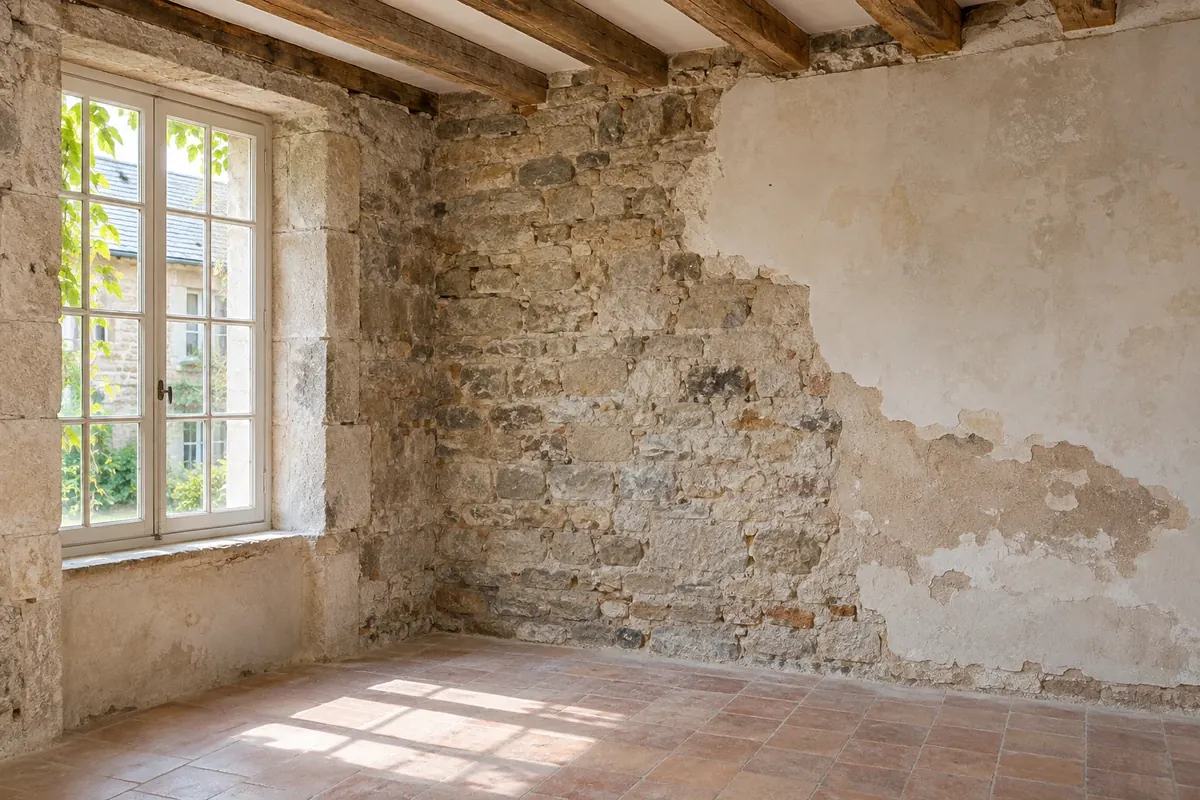
The materials, wall thickness, coatings and room conditions influence how the substrate changes. A mark may remain visible while moisture conditions evolve. Conversely, a surface that looks dry does not describe the whole thickness. Photographs and readings need to be comparable and interpreted with care.
A contractor may propose drying appropriate to the water damage, using ventilation or air dehumidification equipment where suitable. That work is different from choosing a device intended for water rising from the ground through masonry. The expressions may appear similar in searches, but they describe different needs.
When might ATE or ATG be considered?
If the investigation also identifies rising damp, an ATE or ATG project can be considered for that specific cause. Useful information includes the plan, affected masonry, known wall construction and possible installation positions. Repairing the leak remains a separate intervention and should not be treated as an optional part of the device project.
ATE uses mains power; ATG is offered without an electrical supply. Compare the models and their stated coverage diameter against the actual layout. Read the instructions before installation and ask for clarification where needed. A choice should not depend only on the dimensions of a stain or an air humidity reading.
Avoid repeating the finishing work
Arrange checks appropriate to the substrate before closing or redecorating the wall. For a project involving identified rising damp, visit the Humidité Conseil ATE and ATG shop or send your information through the contact form. Including the leak history helps obtain a relevant answer and avoids ordering on the basis of a misunderstanding.