White salts returning after painting: what should you check?
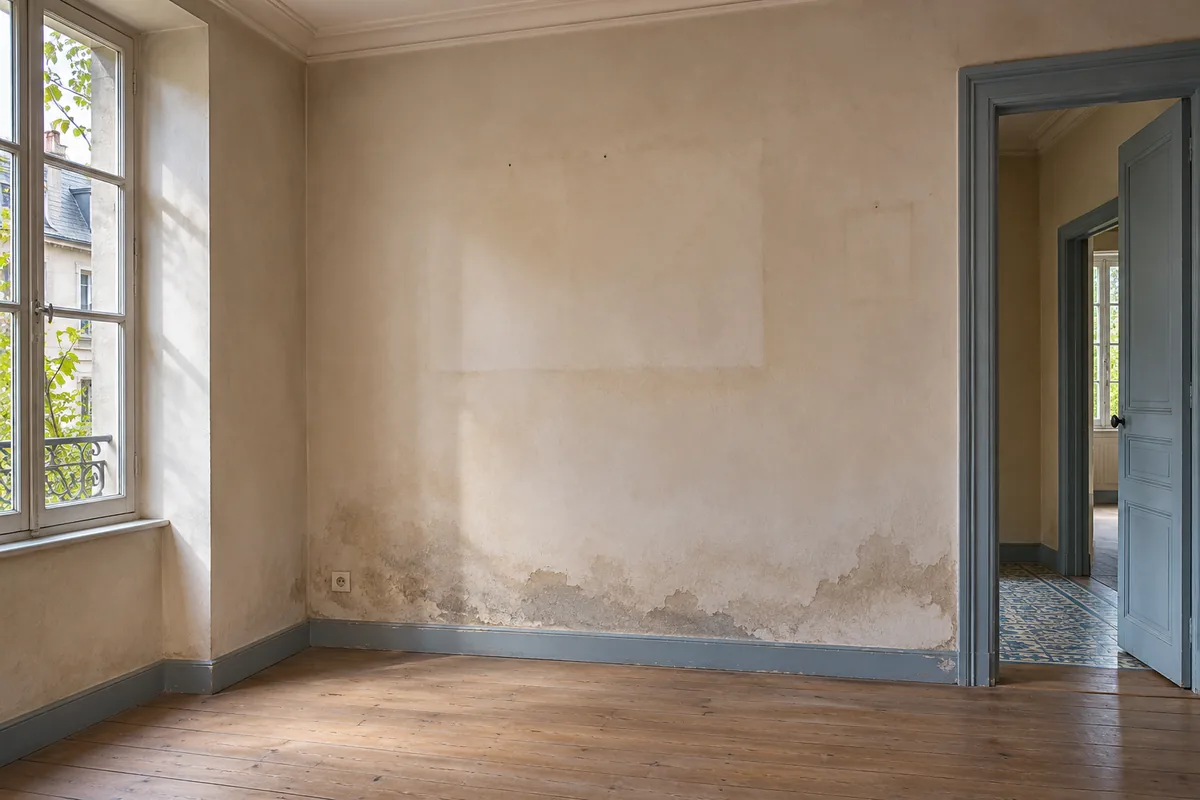
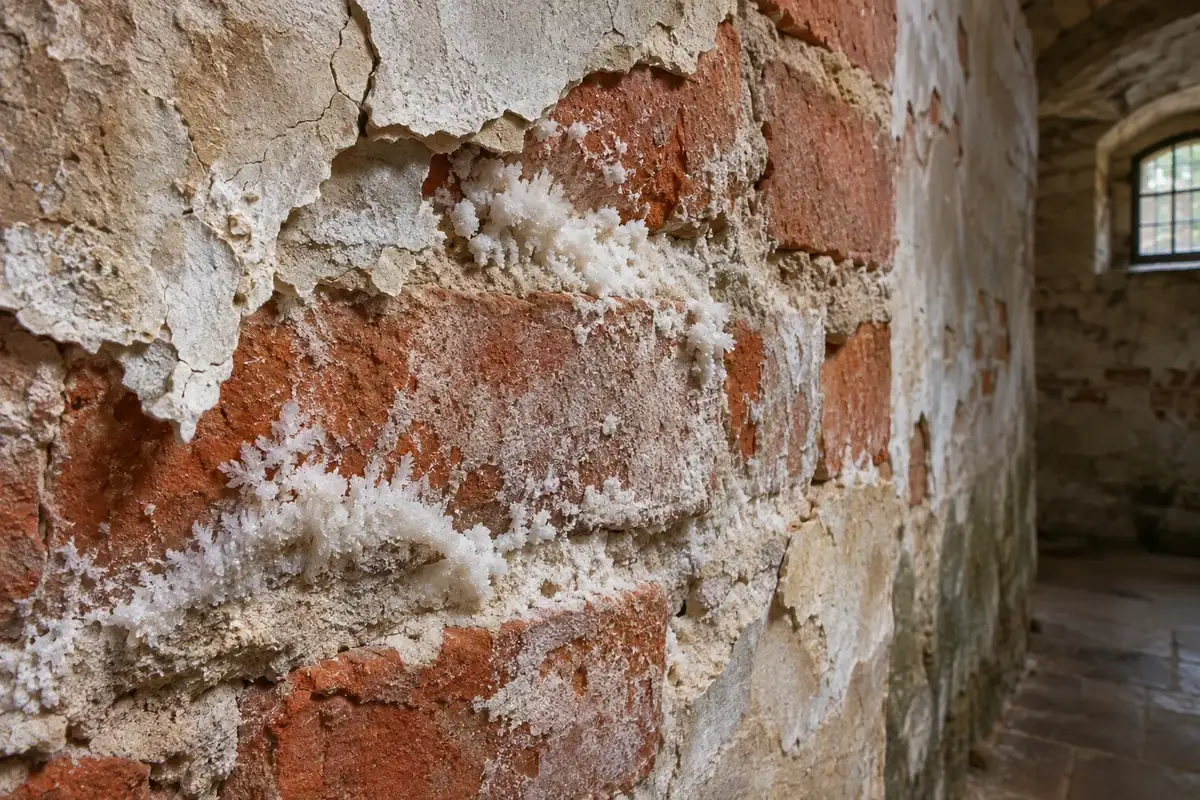
If white salt deposits return after painting, do not repaint immediately. Check whether water is still reaching the wall, salts remain in the substrate and the finish is compatible. White deposits alone do not establish rising damp.
Four things to recover before starting again
- The cause identified during the first treatment and the checks that established it.
- Dates of work, water-source repairs and monitoring conditions.
- The paint or plaster applied, its substrate and preparation.
- Changes in marks with seasons, rain, heating and work on pipework.
For example, paint may blister over old damage even after a leak has been repaired. This alone neither attributes failure to a device nor proves that the leak continues. Examine the substrate and possible water sources.
Do not confuse deposits with a diagnosis
Saltpetre is commonly used for several types of white deposit. Identification may be needed. A salt problem can remain after the cause is corrected. Read our guides on white deposits and on condensation, water ingress and rising damp to widen the investigation.
Before painting again
Ask the finishing professional to inspect detached areas, possible salts and compatibility with the substrate. Paint does not repair a leak or water ingress. No universal repainting date suits every masonry wall. Keep monitoring points and records of the previous treatment. Electrical moisture meter indications must not automatically be treated as actual water content in salt-laden masonry.
When should ATE and ATG be compared?
If rising damp is confirmed, Humidistop ATE and ATG devices offered by Humidité Conseil can be considered for that use. They do not remove wall salts or repair water ingress. Compare model, power supply, stated diameter and instructions rather than choosing from a photograph alone.
- White deposits and their causes
- Condensation, water ingress or rising damp
- Limits of electrical moisture readings
- Documented wall monitoring
- Compare ATE and ATG
Compare devices and order in our shop
Ask for product advice if the origin is uncertain
Technical source: Buildwise, hygroscopic salts and interior plaster (Belgium; French)