ATE and ATG: compare power, coverage and installation conditions
A practical difference between ATE and ATG is power: ATE uses the mains, while ATG operates without an electrical supply. Choose using the identified cause, plan, stated coverage and instructions. The technology name alone does not predict how a wall will evolve.
Start with identified rising damp
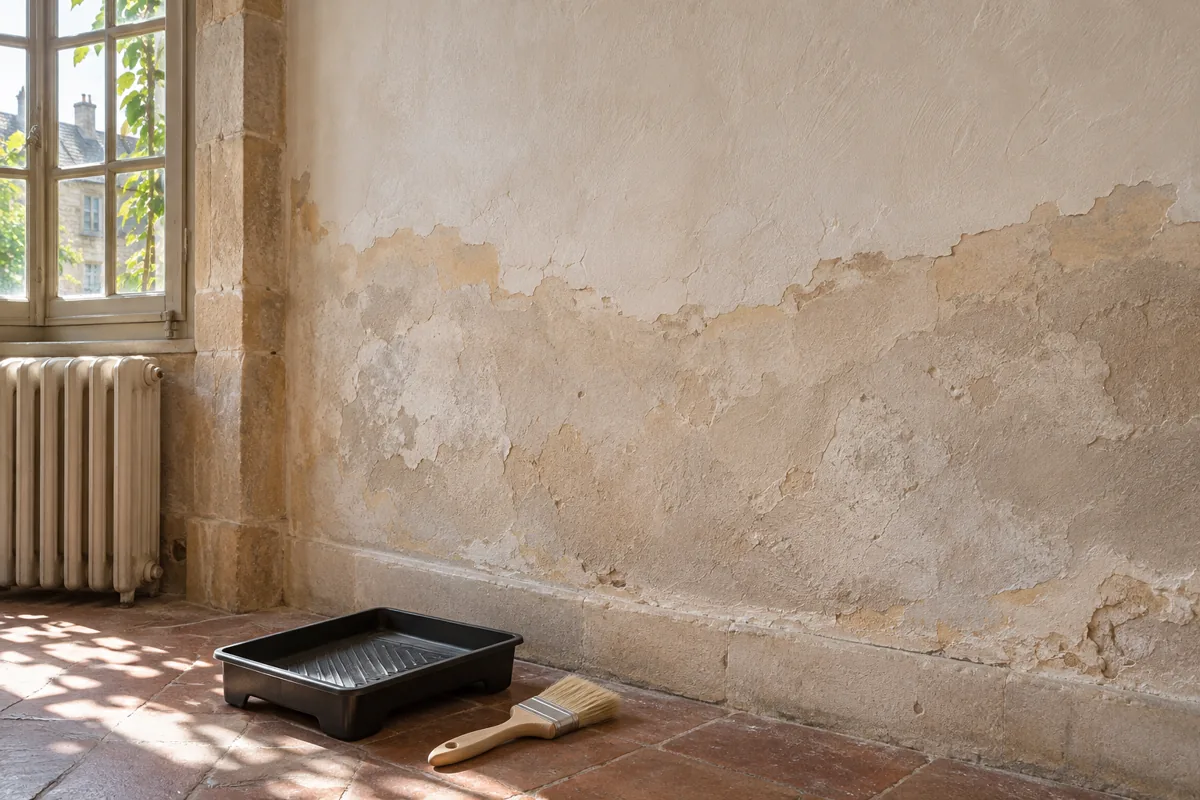
Water can move by capillarity through porous masonry connected to damp ground. Low marks, damaged plaster and white deposits guide investigation but do not alone prove the cause. No stain height automatically confirms rising damp.
Leaks, lateral ingress and condensation can also contribute. Relate observations, history, materials and suitable checks. An air hygrometer does not measure wall water content; thermography describes temperatures, not proof of water entry. Salts can affect electrical readings.
ATE: the powered electromagnetic range
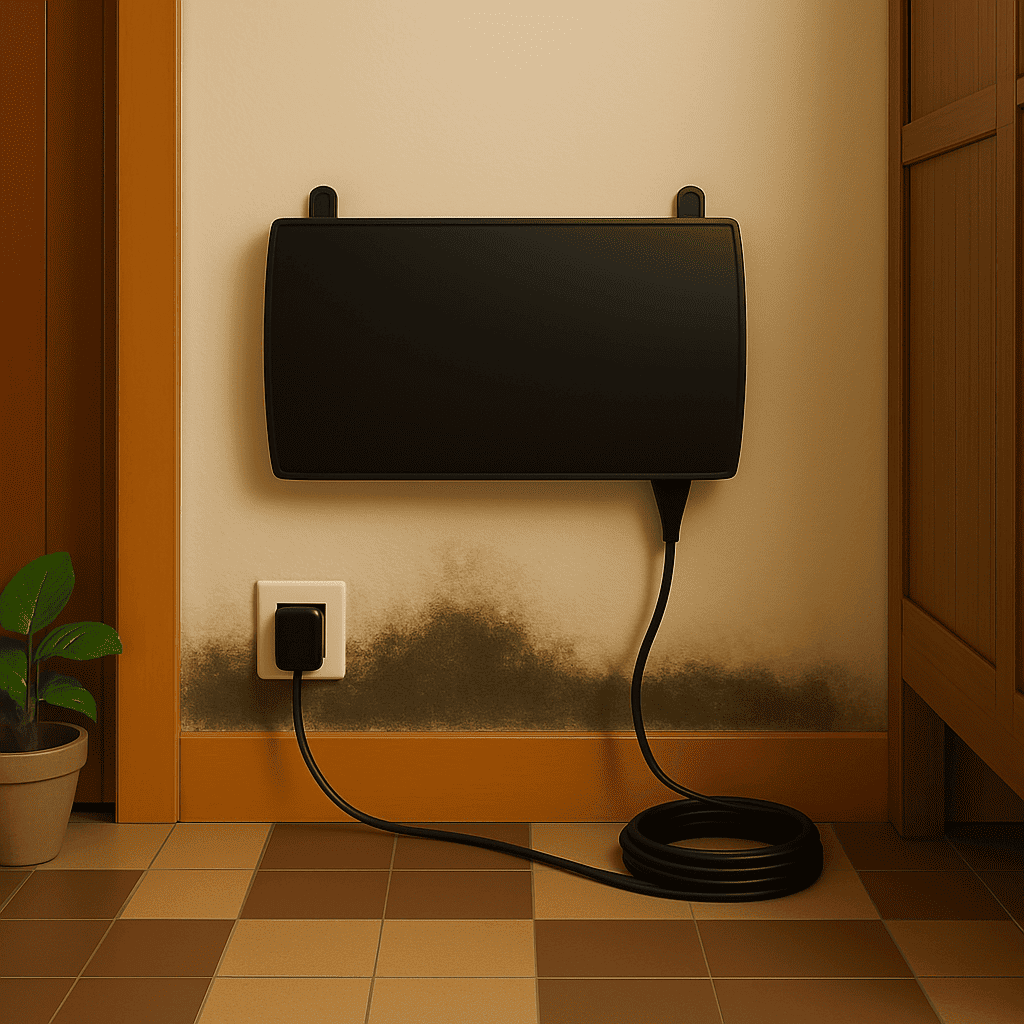
Humidité Conseil ATE models require mains power and compliance with model electrical instructions. Compare access to power, substrate, installation point and stated coverage. Power requirements must fit the building’s actual use.
LC15 states a 15-metre diameter, LC30 and LC30 PULSE 30 metres, and ATE MAX 60 metres. Check the exact specifications. Diameter is neither radius nor habitable floor area.
ATG: the geomagnetic range without electrical power
ATG operates without an electrical connection. LC15 and LC30 have stated diameters of 15 and 30 metres. Independence may suit use constraints; coverage and model conditions still guide selection.
Compare ATG’s autonomy with occupancy needs and installation options. Examine both ranges through current specifications. Substrate, fixing and positioning instructions belong to the actual model.
Shared points and differences to check
Both ranges are offered for identified rising damp. They do not require a product injection line. Mounting may require drilling depending on the model; the specified fixings are part of preparation.
Installation does not repair leaks or ingress, restore detached plaster or remove all salts. Address those tasks according to the identified causes and condition. Read the model documentation for the technology presented and its conditions of use.
Compare the complete project
Injection, physical barriers, water-source work and finish repairs have different functions. Applicability depends on substrate and process. Compare cost and work within a defined scope rather than assuming a whole treatment family is always unsuitable for old buildings.
Ask for the model, instructions, supplied items and warranty conditions. Electrical and electromagnetic compatibility tests concern those subjects. A testimonial concerns one context and does not replace documented monitoring of your wall.
Plan installation and monitoring
Prepare a plan with dimensions, levels and affected walls. Follow instructions without a universal mounting height. Keep a baseline and comparable checks. Drying and finish timing depend on materials, salts and conditions, not the ATE or ATG name.
Use our six-model choice guide, shop and installation guidance to prepare the order. Our team answers product questions before buying.
Related guides
- Distinguish the causes of damp
- Compare ATE and ATG devices
- Plan documented wall monitoring
- Understand electrical moisture readings
Compare devices and order in our shop · Ask for product advice by email
Technical reference: Historic England, RICS and PCA — England, 2022
Buildwise — electrical meter limits (Belgium; French)
Confirmed rising damp? Compare our Humidistop devices