Rising damp: causes, capillary movement and building damage
Rising damp is water moving from damp ground into connected porous masonry. A low stain is only a clue: leaks, lateral ingress, condensation and salts can produce overlapping signs. Confirm the source before selecting treatment.
How capillary movement occurs
Water can move through connected pores in brick, stone and mortar. A cloth wick dipping into water illustrates capillarity, although a wall is more complex: its construction, water supply and evaporation conditions all matter.
No universal visible height proves rising damp. A tide mark may reflect salts or an earlier episode and does not measure water content through the wall.
Ground, protection and construction
Check whether a capillary break exists, whether it is continuous and whether raised external ground levels bypass it. A building’s age does not prove protection is absent or has failed.
Soil behaviour depends on its composition and condition. Examine drainage routes, slopes, ground levels and any buried masonry. Distinguish capillary uptake from lateral entry or water under pressure; do not specify drainage solely from a soil label.
Porosity and water movement vary between products, joints, stone and mortar. Do not rank all concrete, brick or lime construction using one absorption rule. Survey the actual assembly, alterations and cracks.
What the visible signs mean
Low staining, peeling decoration, damaged plaster and white deposits justify investigation. White material does not automatically identify one salt or establish rising damp.
Musty smells, swollen timber, lifting tiles or cold surfaces may accompany several problems. Touch and smell cannot measure a wall’s water content or identify its source. Record dates and photograph both the room and details.
Damage, salts and comfort
Water and salt crystallisation can deteriorate finishes and some materials. The mechanism and significance depend on exposure and condition. Loose masonry, marked movement or concerns about load-bearing elements require a suitable building assessment.
Some salts absorb moisture from air. Persistent surface dampness can therefore have a different explanation from an ongoing ground-water supply. Repainting alone may hide evidence or fail if substrate conditions remain unsuitable.
Wall temperature and comfort also depend on heating, insulation and evaporation. Room humidity is influenced by occupancy and air renewal. A damp appearance does not quantify energy consumption or establish a health diagnosis.
Distinguish the other sources
Condensation relates to air moisture and surface temperature. Inspect ventilation, vapour production, heating and thermal bridges. A room hygrometer measures air, not water inside masonry.
Rain ingress can involve façades, roofs, connections and buried walls; it is not restricted to horizontal movement. Compare changes after rain. Suspected plumbing, heating or drainage leaks need relevant network checks. Causes can coexist.
How to confirm the cause
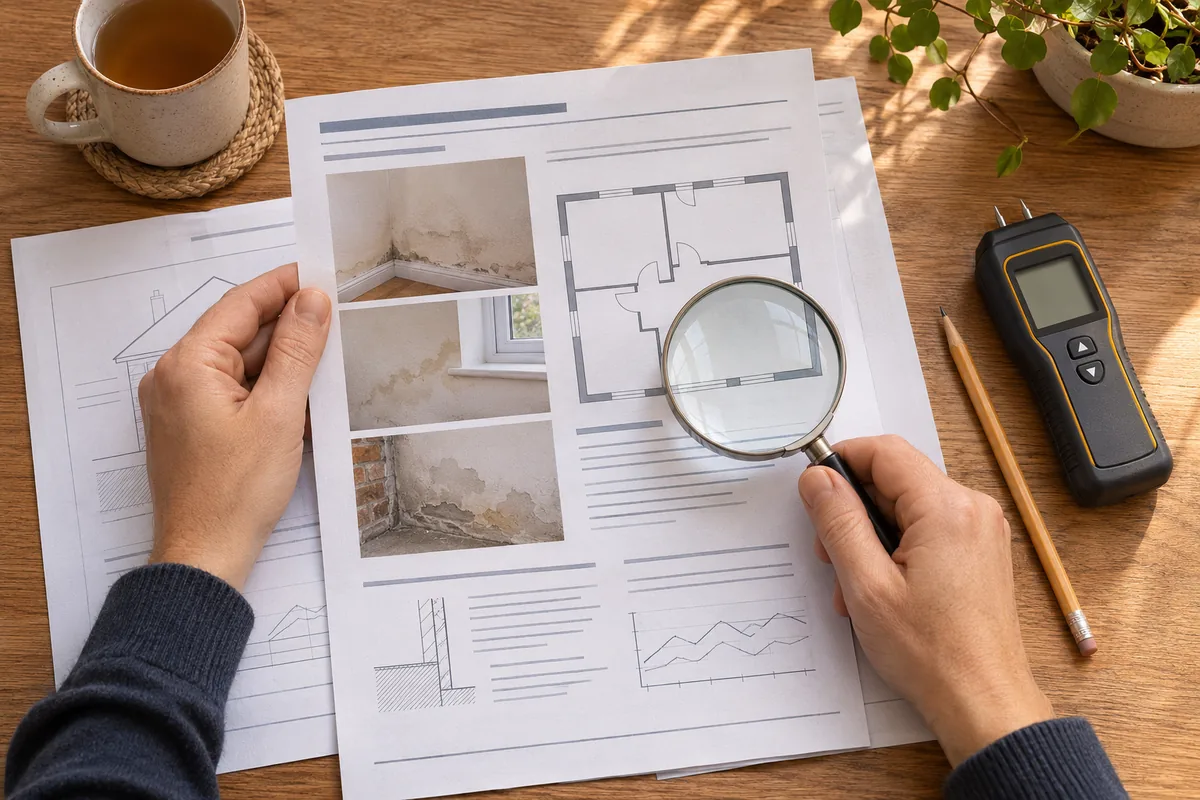
Combine the building’s history, accessible inspection, materials and suitable tests. Electrical readings need interpretation because salts and materials affect them. Infrared images show surface temperatures, not direct proof of rising damp.
If actual water content is required, an investigator may select sampling with gravimetric or carbide methods under an appropriate protocol. Salt analysis answers a separate question. Record locations, depth and conditions so later comparisons are meaningful.
Choose a response and keep a baseline
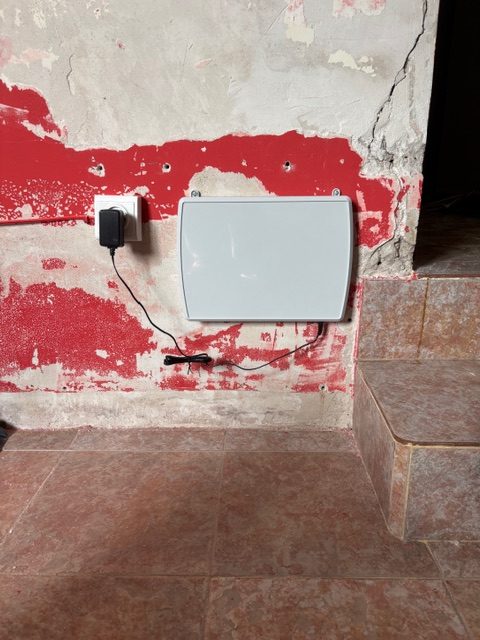
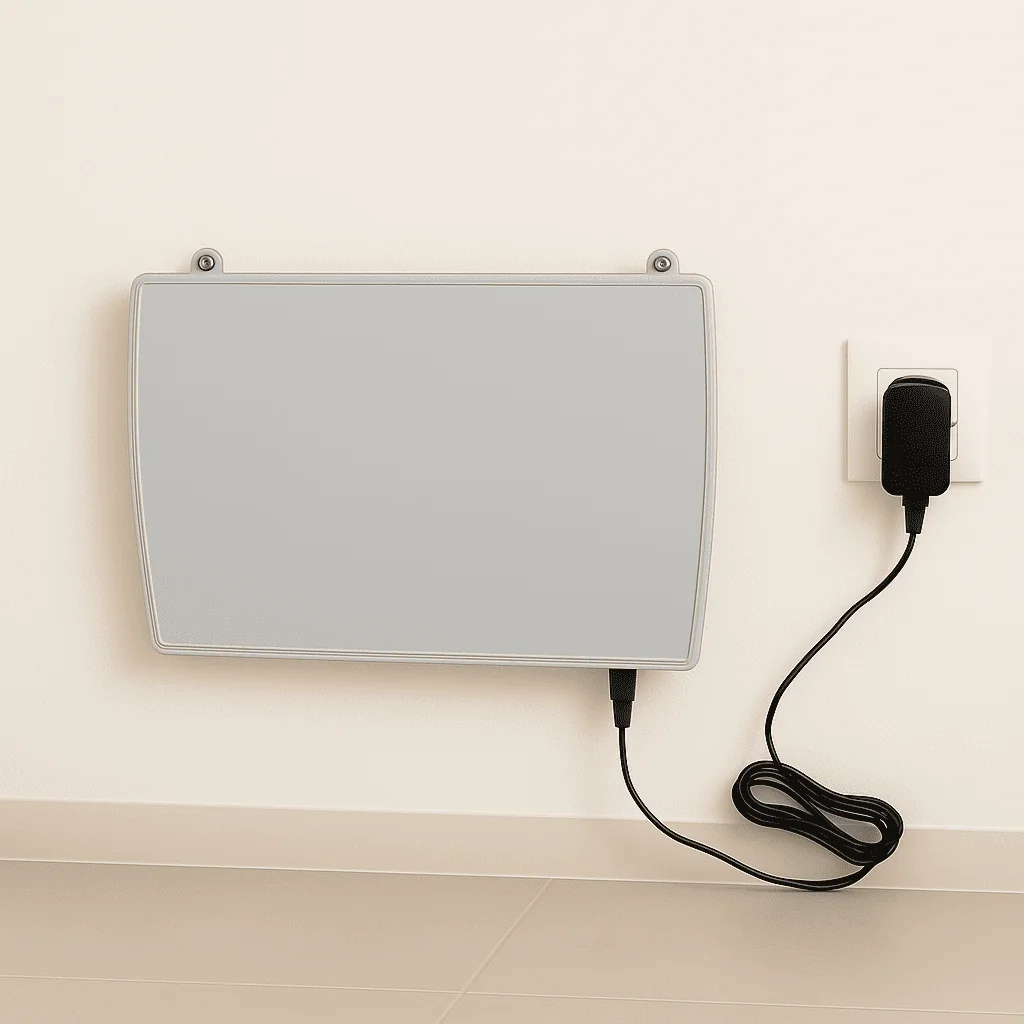
Address the identified water source and define any separate finish repairs. Humidité Conseil offers Humidistop ATE and ATG for identified rising damp. Compare the model, stated diameter, power requirements and instructions on a measured plan.
These devices do not repair leaks, lateral ingress or ventilation. Installation may need fixing holes. Read the model documents and current commercial terms, then use our shop to order. Document the initial condition and comparable checks rather than relying on an assumed universal drying period.
Related guides
- Distinguish the causes of damp
- Compare ATE and ATG devices
- Plan documented wall monitoring
- Understand electrical moisture readings
Compare devices and order in our shop · Ask for product advice by email
Technical reference: Historic England, RICS and PCA — England, 2022
Confirmed rising damp? Compare our Humidistop devices