Rising damp: recognise clues and choose an appropriate response
Rising damp can affect older homes, ground-floor rooms, cellars, garages and walls connected to damp ground. It involves water moving through porous building materials from the ground.
Stone, brick, mortar, blocks and concrete may absorb moisture. Water and deteriorating finishes can produce visible marks. Humidité Conseil helps explain possible origins before comparing an appropriate response.
What is capillary moisture?
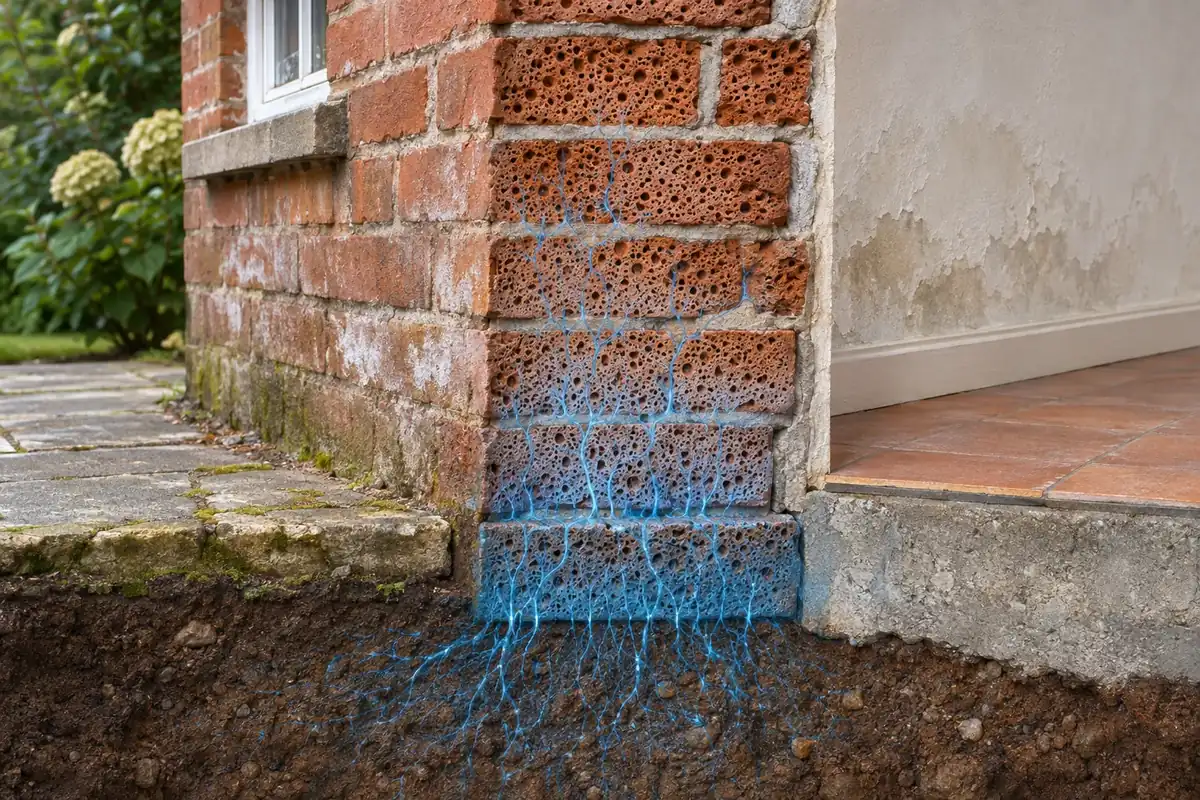
Building materials contain pore networks through which water can move. Where effective protection is missing, ground moisture can enter masonry. Porous walls connected to a damp ground zone may be affected. Load-bearing function and building age do not establish the diagnosis. Examine missing, interrupted or bypassed protection in context.
Clues that can suggest rising damp
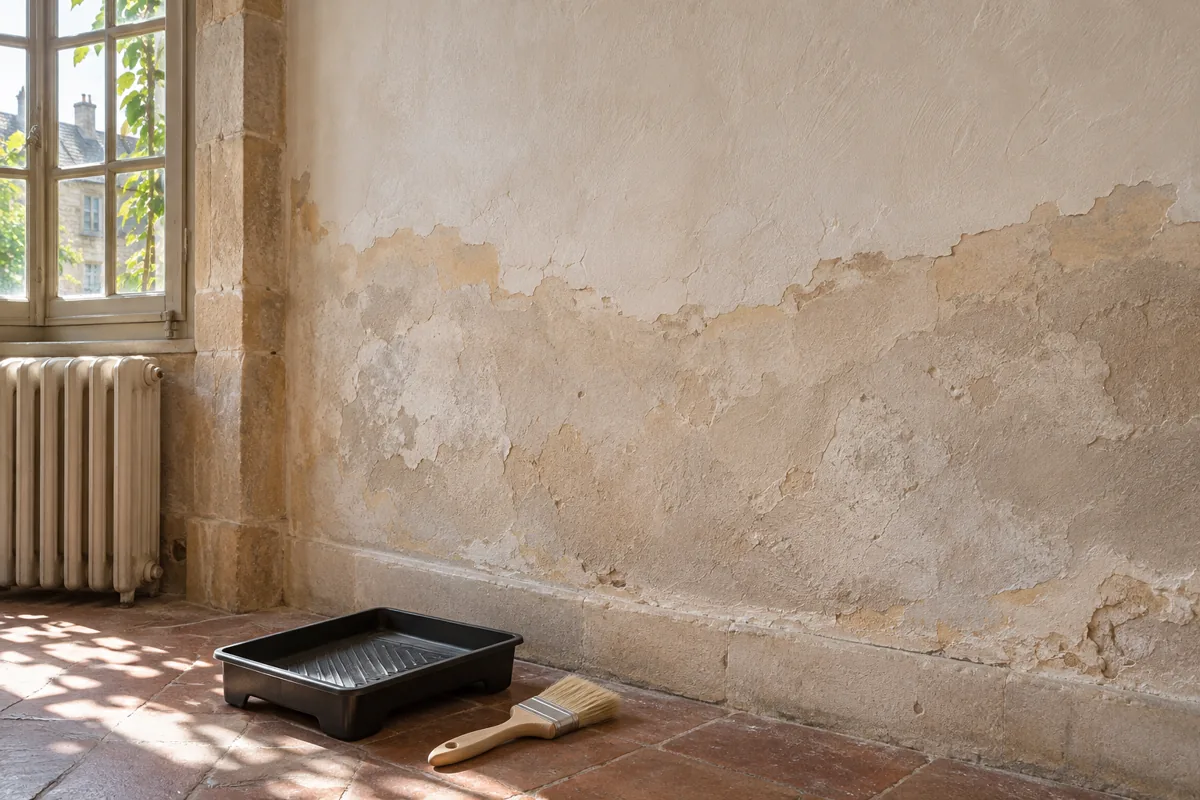
Low damp marks, blistering or peeling paint, friable plaster, white salt deposits, damaged skirtings, persistent smell, a cold or damp feel and marks appearing to start from the ground may guide checks. They do not confirm the origin alone.
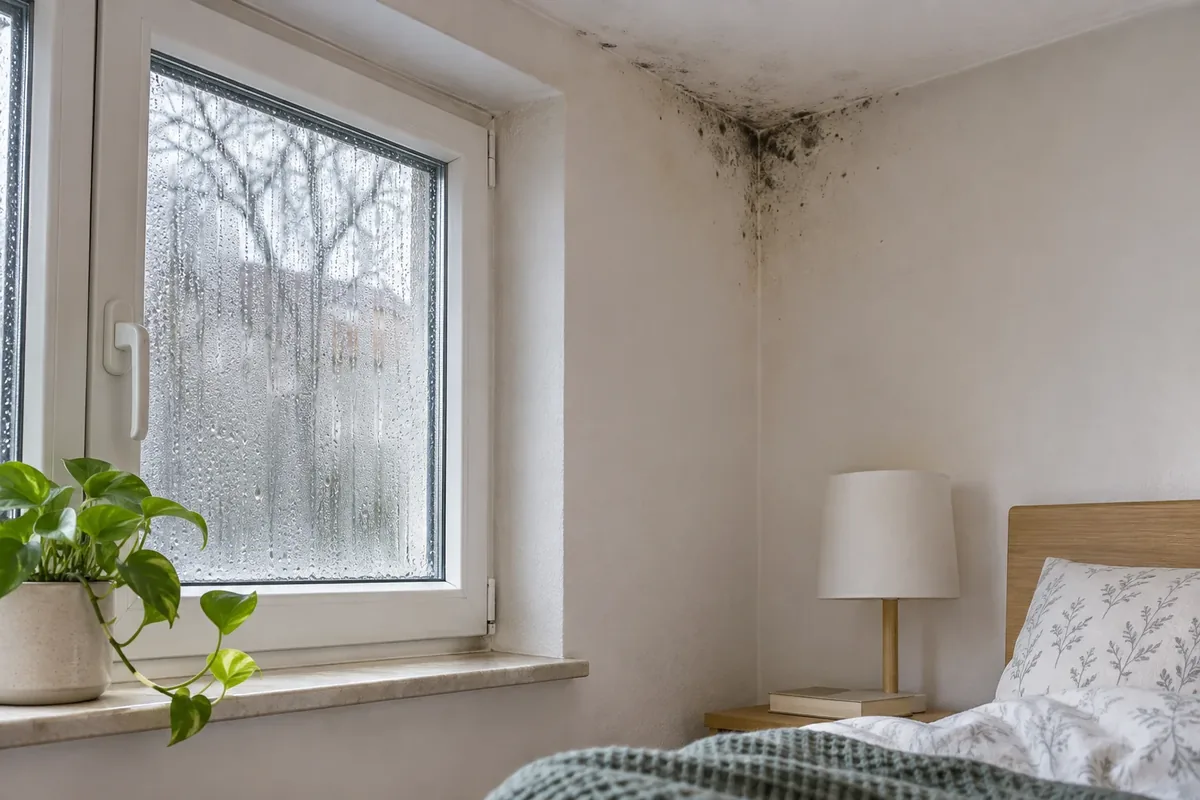
Location provides an initial clue. Capillarity may be involved where marks appear to extend upwards, but ceiling, window and corner marks may involve ingress or condensation too. No single location excludes other causes.
Why distinguish capillarity, ingress and condensation?
Rising damp involves ground water moving through materials, often affecting low walls. Ingress is water entering from outside: façades, roofs, terraces, gutters or buried walls. Condensation involves water vapour and cold surfaces, often alongside insufficient ventilation.
Choosing for the correct mechanism avoids unsuitable treatment. A rising damp device does not repair active ingress or a leak or replace action on condensation.
Causes and factors that influence drying
Examine missing damp-proofing, capillary materials connected to damp soil, surrounding ground moisture and rainwater drainage. Coatings and ventilation can affect drying without being the ground-water source. Renovation incompatible with older materials may also alter behaviour.
Some work changes evaporation opportunities. Low-permeability paint or render can move visible symptoms and contribute to damage. This does not establish it as the water source. Assess materials, exposure and system function rather than removing waterproofing as a rule.
Possible actions against capillary moisture
Depending on the identified conditions, review drainage and rainwater flows, coating compatibility, suitable plaster, ventilation and any separate ingress repairs. A device may be considered for identified rising damp, with model selection based on the configuration.
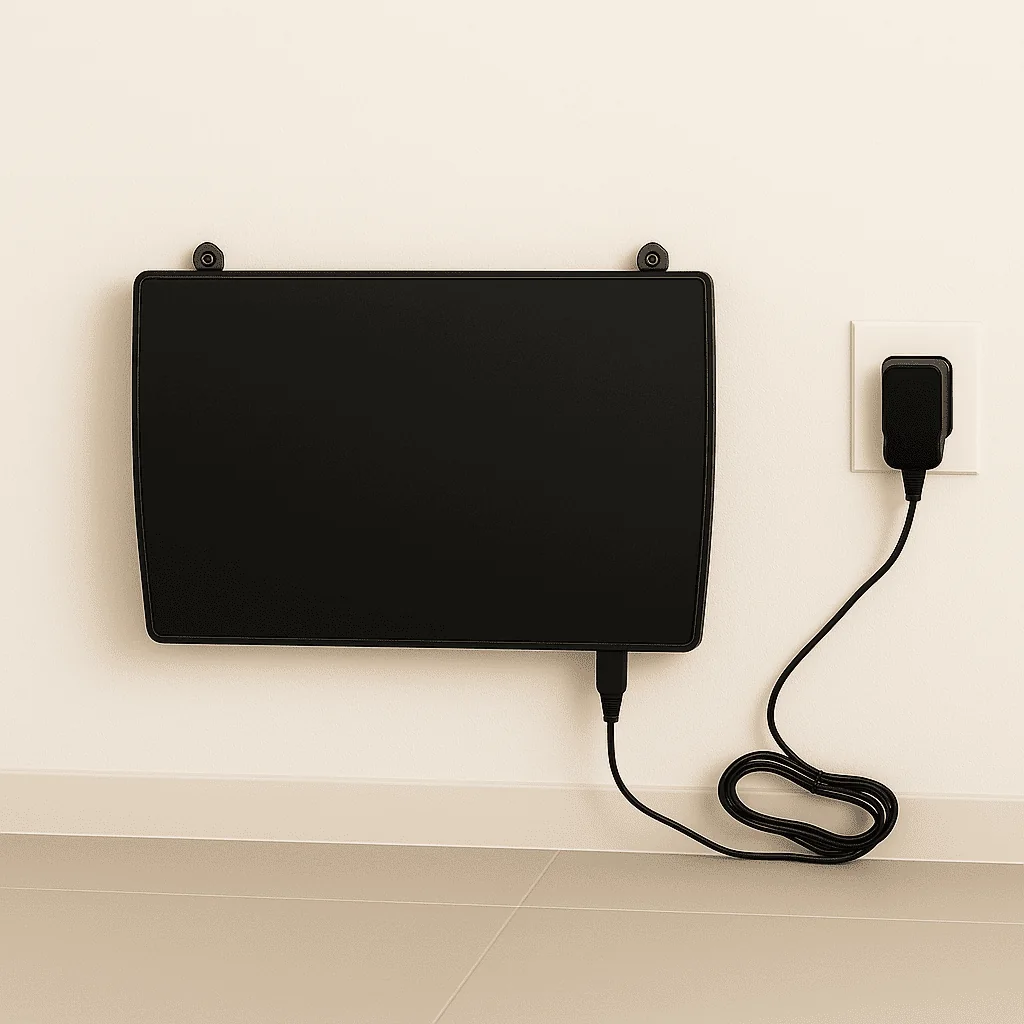
Humidité Conseil offers electromagnetic ATE and geomagnetic ATG devices for this purpose. They do not replace necessary repairs for ingress, leaks or ventilation. ATE needs electrical power; ATG operates without an electrical supply.
Choose using the actual building
Record dimensions, wall thickness, construction, shape, mark heights, cellars and the affected area. These are context, not a rule that determines a model from floor area or thickness alone. Compare a plan, installation point and stated coverage. Diameter in metres is not area in square metres.
Our team can help explain product information for the building configuration and identified use. Check the actual instructions before purchase.
Before installation
Establish that the problem is rising damp. Select a substrate that follows the instructions, check coverage and distinguish radius from diameter. Ask about lined or lightweight walls. Maintain appropriate ventilation and address separate water entry. Have finish repairs specified without automatically removing water protection.
Wall evolution depends on thickness, initial moisture, ventilation and building conditions. A progressive drying process does not imply a universal timescale or guaranteed result.
Prepare a considered choice
Use the cause guide, compare ATE and ATG and read the installation documents. If the model suits confirmed rising damp, explore our devices and order in the shop. Keep an initial record and use monitoring appropriate to materials and salts.
Related guides
- Distinguish the causes of damp
- Compare ATE and ATG devices
- Plan documented wall monitoring
- Understand electrical moisture readings
Compare devices and order in our shop · Ask for product advice by email
Technical reference: Historic England, RICS and PCA — England, 2022
Buildwise — electrical meter limits (Belgium; French)
Agence Qualité Construction — rising damp, France, September 2026 (French)
Confirmed rising damp? Compare our Humidistop devices