Damp in a historic building: prepare the project before choosing a device
In a church or historic property, limiting work does not remove the need to assess its compatibility with the building. Document the affected materials, possible water sources and proposed intervention before choosing a rising damp device. A mark at the base of a wall does not identify its cause alone.
Assemble a clear record
Gather measured plans, dated photographs and previous repair records. Mark structural walls, decorated surfaces, buried sections and accessible areas. A roof leak and moisture at the base of masonry should not be treated as one problem without investigation.
Describe fixings as well as equipment
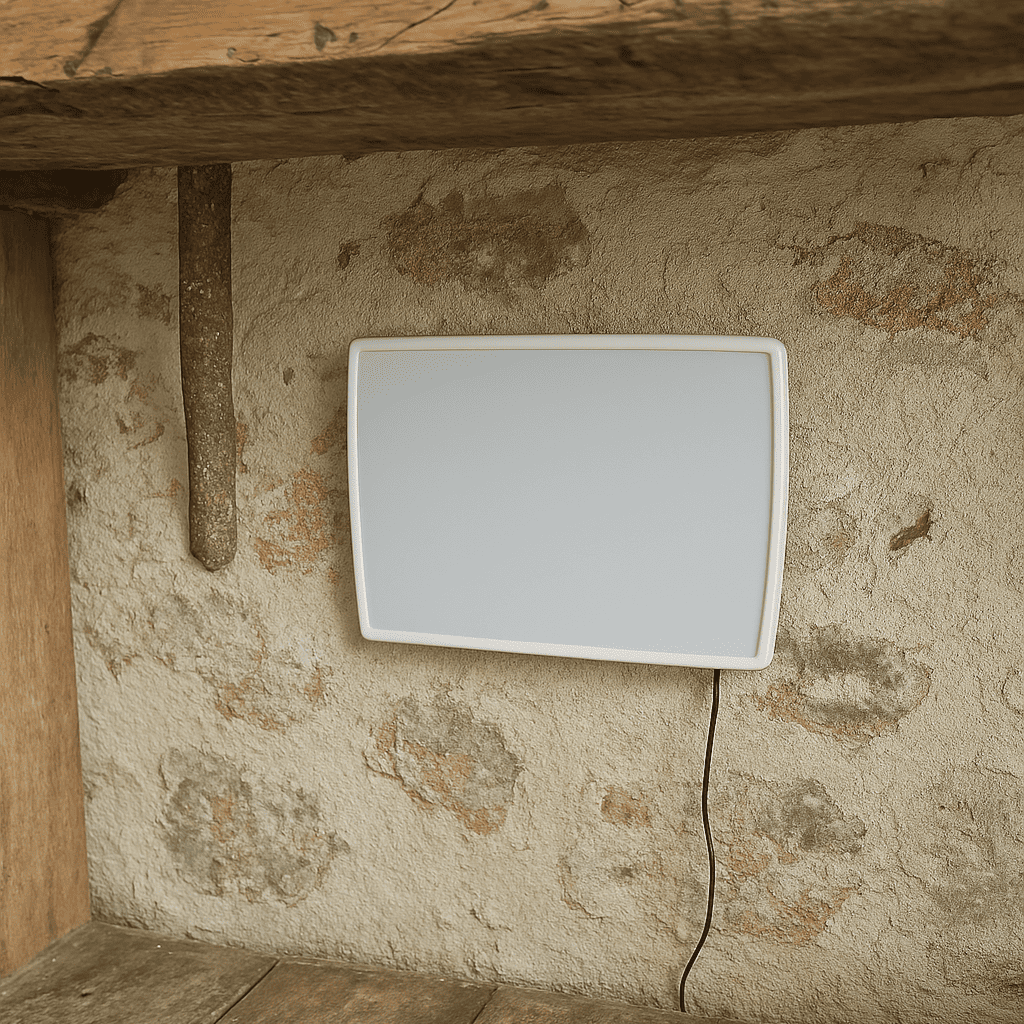
A system without resin injection may avoid some work in the masonry, but its fixings still need to be described. Specify support, location, access and any power supply. Discuss the proposal with those responsible for the building and its conservation, including the approvals applicable to the project.
Compare coverage and follow-up
Check distances against the actual layout, wings and construction phases. Distinguish work on rainwater, ventilation and finishes from the proposed equipment. Retain an initial record and agree appropriate follow-up. A reference from another monument gives context, not a promise of the same result.
Where to find product information
Humidité Conseil offers mains-powered ATE and ATG without an electrical supply for rising damp. If that use matches the confirmed cause, compare the exact manual and model documents with the project. Neither family replaces repairs to active leaks or a conservation strategy for the building.
Useful guides and product documents
Compare ATE and ATG · Prepare the installation · Monitor the wall
View devices in our shop · Ask for product advice
Historic England — investigating moisture in traditional buildings (England)