Suspected rising damp after renovation: what changed before treatment?
Marks appear after work and you suspect rising damp? The timing matters but does not establish the cause. Renovation can change levels, finishes, surface temperatures or air renewal. Recover what changed before selecting a treatment.
This approach prepares a before-and-after building record. It does not automatically attribute damage to the work; it helps formulate questions and distinguish possible mechanisms.
Reconstruct before and after
Gather dates, photographs and descriptions of interventions. Identify rooms, removed materials and new systems, including older water repairs. Newly visible marks may previously have been hidden. Mark damage and work on a plan and note changes after rain, heating or occupancy. This timeline frames checks without replacing them.
Outside levels and ground contact
A terrace, courtyard or landscaping can alter the base of a wall. Compare levels and visible drainage where access is safe. Ask whether existing protection still suits the new layout. Buried or partly buried walls can receive water laterally: low marks are not automatically water rising from the ground. Examine possible paths before intervening.
Plaster, linings and paint
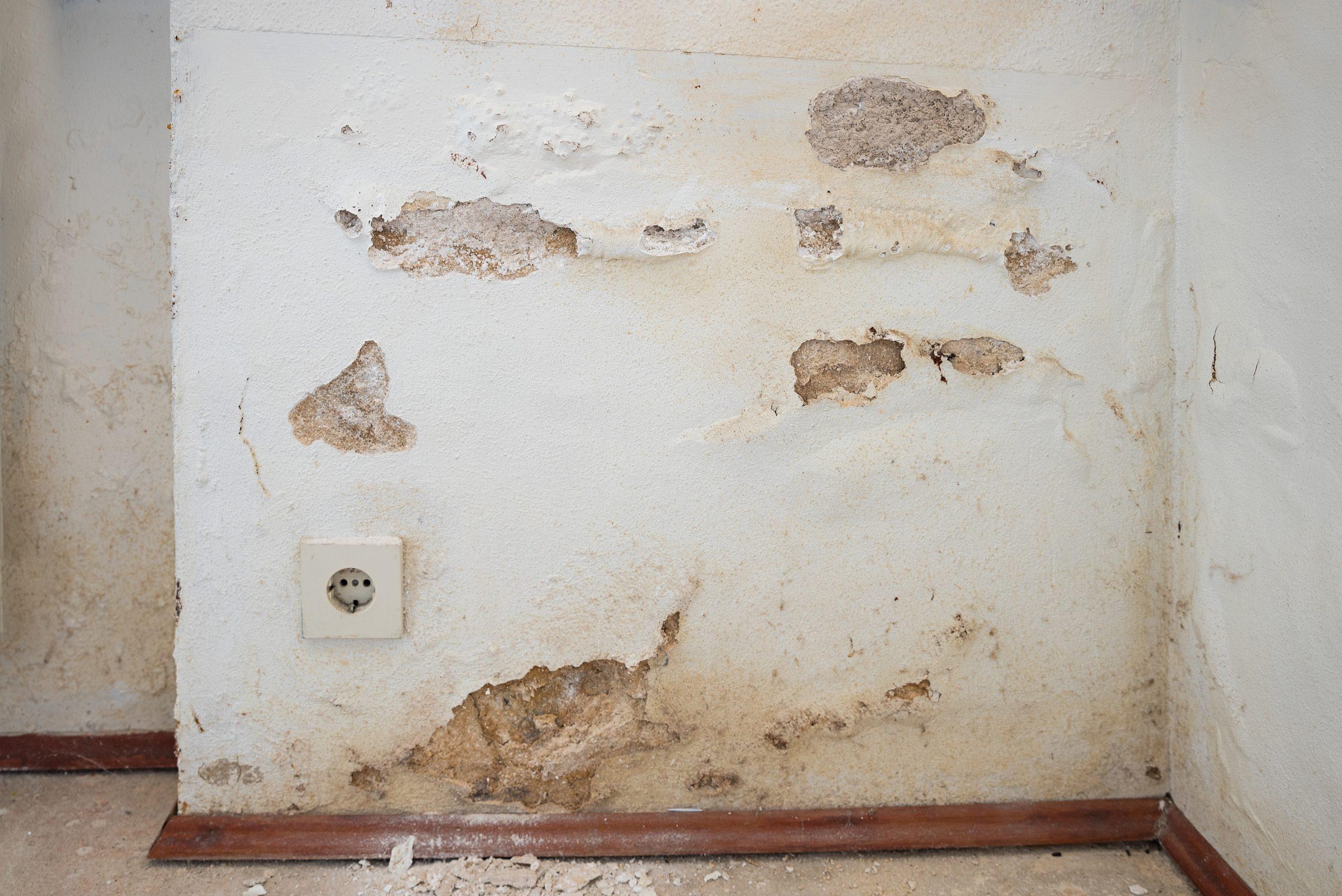
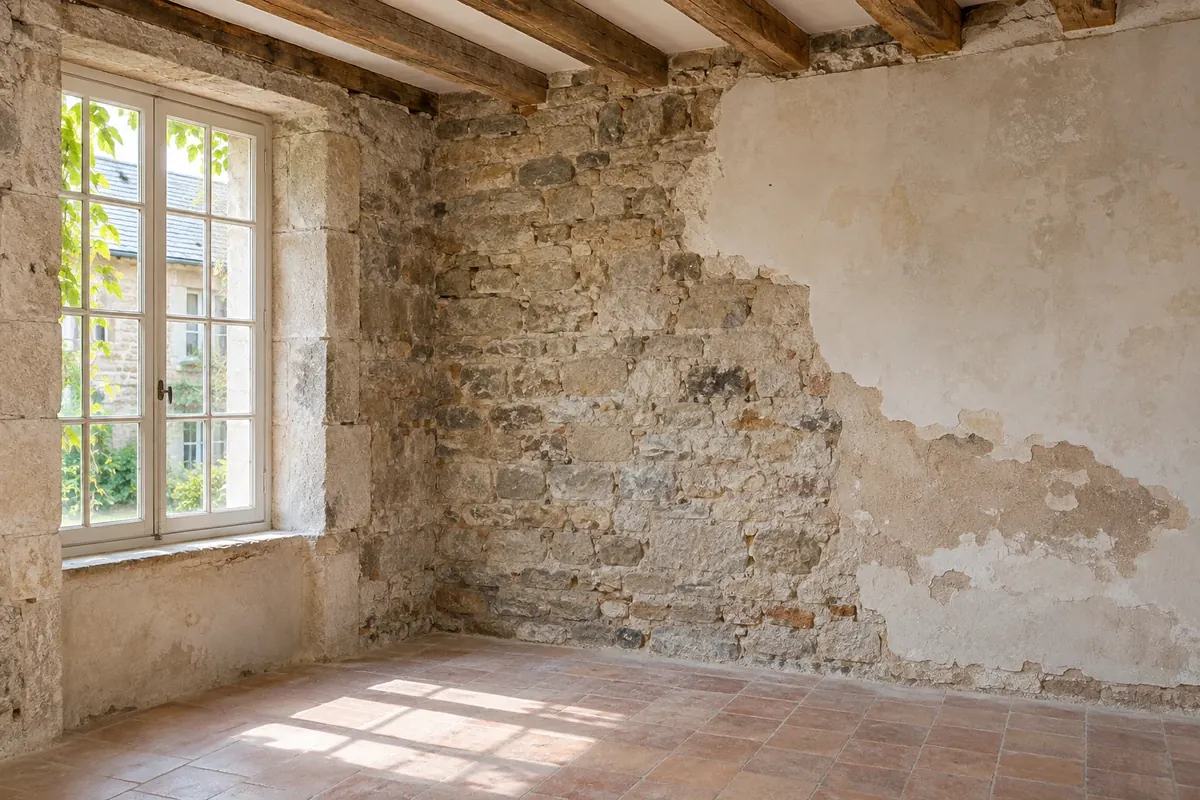
A new coating may change evaporation opportunities and make masonry harder to observe. It can conceal earlier damage. Describe the full system, not paint colour alone. Detached or friable finishes need assessment alongside salts and substrate moisture. Do not choose another finish just to hide marks. Ask about its conditions and how monitoring will remain possible.
Windows and air renewal
Replacing windows may change air renewal. Marks in cold corners or condensation on glazing warrant checks of room conditions and surface temperatures. Record air temperature and relative humidity with use and ventilation. These do not directly measure water in the wall. A capillarity intervention does not replace necessary ventilation.
Services and entry points
Bathroom work, relocated pipes or outside connections may justify leak and ingress checks. Proximity alone does not establish the cause; it is a hypothesis for investigation. Describe damage on both wall faces where possible. General views, equipment locations and a timeline provide more than one close-up of damaged paint.
How can rising damp be confirmed or excluded?
Assessment combines context, location, protection, materials and appropriate checks. White deposits alone do not prove the water origin. Some salts absorb air moisture and may keep affecting surfaces. Electrical measurements depend on salts and substrates. Ask for a method suited to the question and its limits. An unexplained percentage does not reveal why water is present.
Choose after clarifying the changes
A leak or ingress needs action at its source. Condensation requires consideration of air, uses and surfaces. For confirmed rising damp, compare masonry treatments with documents and monitoring. Humidité Conseil offers ATE and ATG for this last use. Suitability depends on diagnosis and model conditions. Prepare a plan for coverage and position: diameter is not floor area. ATE requires power; ATG operates without electrical supply.
Plan the next checks
Keep reference points and record later building changes. Comparable monitoring distinguishes water evolution from finish changes. Repainting should follow the substrate condition rather than a universal deadline.
Frequently asked questions
Do marks after work prove defective workmanship?
No. Timing justifies investigation, not an automatic conclusion about cause or responsibility.
Must all linings be removed?
The need and method for opening depend on the context. Gather available information first.
Where should I start?
Begin with the five moisture situations and a dated record, then compare product information where rising damp has been confirmed.
Related guides
- Distinguish the causes of damp
- Compare ATE and ATG devices
- Plan documented wall monitoring
- Understand electrical moisture readings
Compare devices and order in our shop · Ask for product advice by email
Technical reference: Historic England, RICS and PCA — England, 2022
Buildwise — hygroscopic salts and finishes (Belgium; French)